


IISG consultations in Tirana advance regional security cooperation and evidence-based governance
24 April 2026
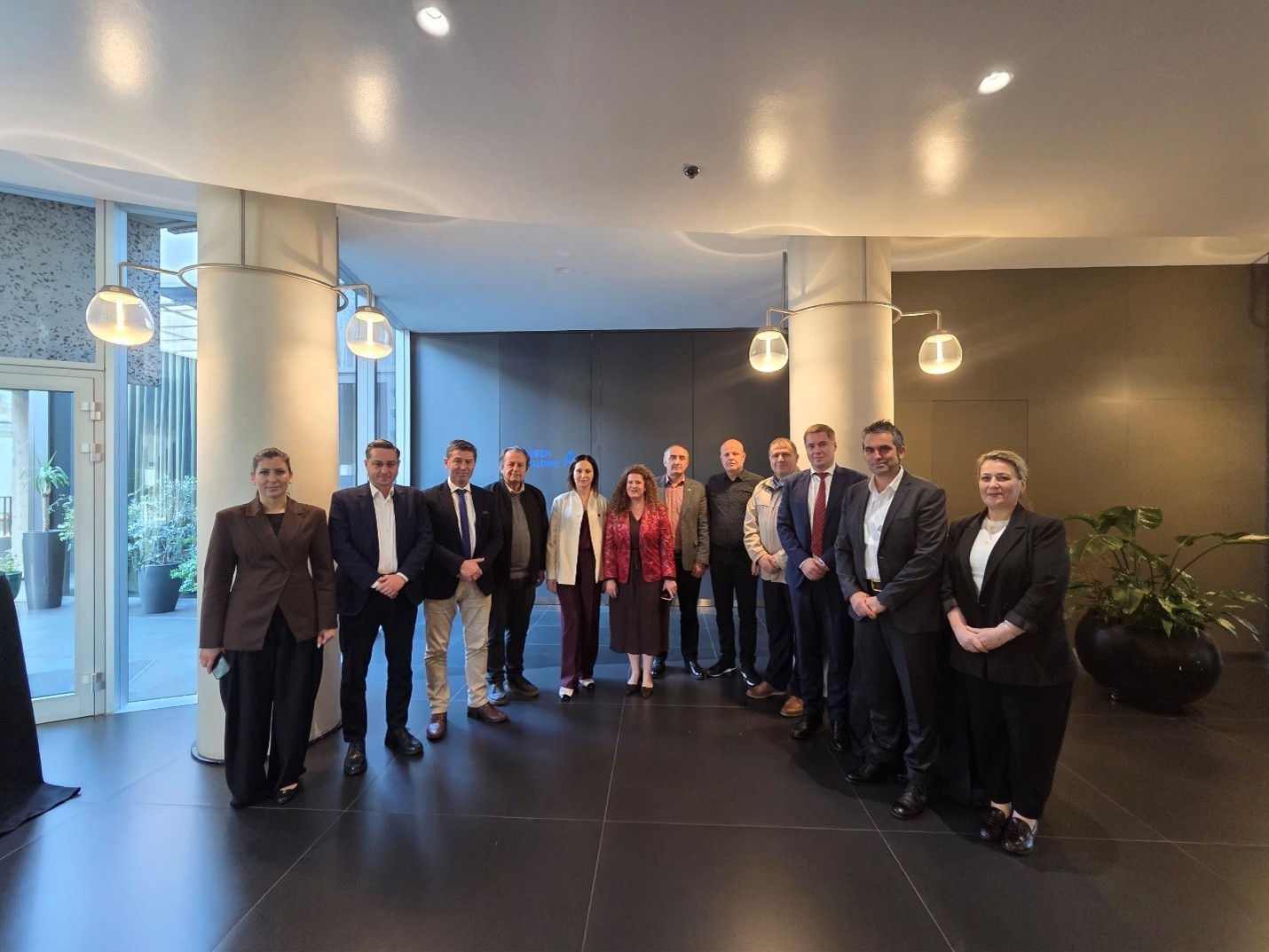
The Integrative Internal Security Governance (IISG) representatives held consultations with Albanian security governance institutions on 24 April 2026 (Photo: RCC/IISG)
Tirana – Representatives of the Integrative Internal Security Governance (IISG) held consultations with Albanian institutions responsible for security governance as part of IISG’s regular engagement with Western Balkans Six partners and ongoing activities under the Regional Cooperation Council’s (RCC) Security Governance Hub.
The consultations brought together representatives of the Ministry of Interior, the Albanian State Police, the Countering Violent Extremism Center and IISG to discuss recent developments and priorities across the three IISG pillars: the Western Balkan Counter-Terrorism initiative (WBCTi), the Western Balkan Counter-Serious Crime initiative (WBCSCi) and the Western Balkan Border Security initiative (WBBSi).
Participants from the Ministry of Interior included Margarita Vogli, Head of the Sector for Policies on Countering Organised Crime and Terrorism; Iris Hodaj, Head of the Sector for Migration and Border Policies; and specialists Alban Haxhi and Onida Hoxhalli. The Albanian State Police was represented by Aldo Londo, Head of the Terrorism Verification and Security Unit; Gjergji Oshafi, Head of the Narcotics Investigation Sector; Ylli Doda, Head of the Property Crime Investigation Sector; Lavdim Durbaku, Head of the Land Border Sector; and Ylli Kumrija, Head of the Sector for Irregular Migration, Returns and Readmission. Marjola Çela, Specialist in the Sector for Coordination of Civil Society and Security at the Countering Violent Extremism Center, also participated in the consultations.
IISG presented its ongoing work on mapping regional security needs and responses, improving donor coordination, supporting project implementation and advancing the operational transition towards the Security Governance Hub within the RCC framework. Particular attention was devoted to preparations for the upcoming eighth IISG Board Meeting and to further strengthening evidence-based and data-driven security governance across the Western Balkans Six.
Participants also discussed support for monitoring the implementation of the Joint Action Plan on Counter-Terrorism and Preventing and Countering Violent Extremism in the Western Balkans Six. IISG briefed its Albanian counterparts on support provided for the development of counter-terrorism (CT) and preventing and countering violent extremism (P/CVE) roadmaps aligned with European Union (EU) standards and the objectives of the Joint Action Plan.
The discussions highlighted the importance of clearly defined indicators, measurable targets, implementation timelines and effective institutional coordination mechanisms for advancing shared security priorities and assessing progress.
IISG also presented updates on the IISG Database, including developments related to needs mapping, analytical functions and regional reporting. As a regional coordination and analytical platform, the database supports donor coordination, helps identify gaps and overlaps, informs strategic planning and increases the visibility of security-related assistance and initiatives across the region.
The consultations reaffirmed Albania’s active engagement in RCC and IISG processes and highlighted the importance of regular coordination, regional cooperation and evidence-based policymaking in strengthening security governance across the Western Balkans Six.