



Regional coordinators in Podgorica advance joint action on counter-terrorism and violent extremism
11 April 2025
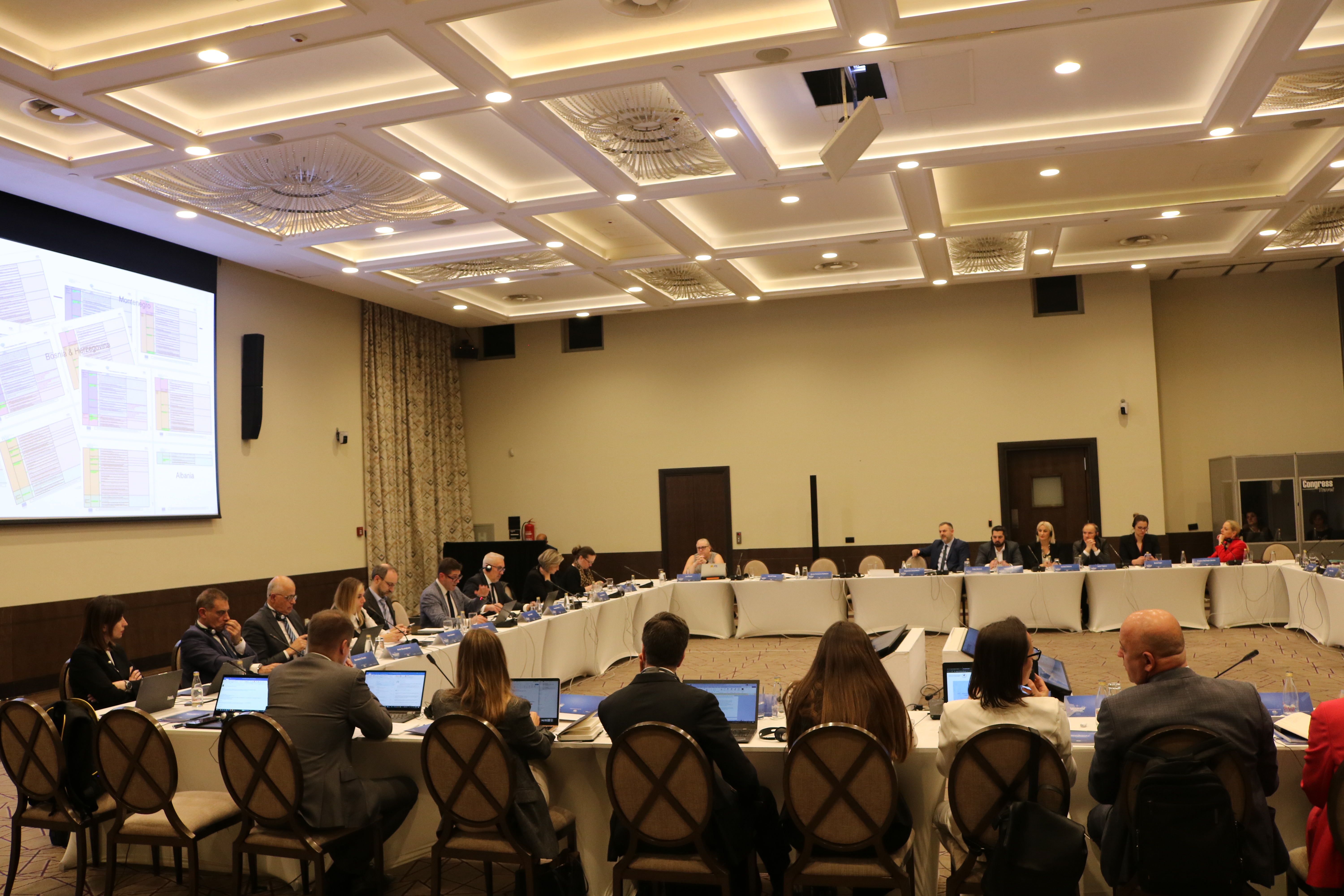
17th meeting of the Regional Network of National Counter-Terrorism and Preventing and Countering Violent Extremism Coordinators (RNNC) on 10–11 April 2025 in Podgorica (Photo: RCC)
Podgorica – The Integrative Internal Security Governance (IISG) organised the 17th meeting of the Regional Network of National Counter-Terrorism and Preventing and Countering Violent Extremism Coordinators (RNNC) on 10–11 April 2025 in Podgorica.
The meeting brought together coordinators from the Western Balkans Six, representatives of the European Commission, international organisations, regional experts and civil society to review progress, exchange information on emerging threats and discuss future counter-terrorism and preventing and countering violent extremism (CT-P/CVE) priorities.
Coordinators from the Western Balkans Six presented updates on the implementation of the Joint Action Plan (JAP) and highlighted challenges including online radicalisation, foreign terrorist fighters, radicalisation in prisons, hate speech and the protection of critical infrastructure.
Olivia Debaveye from the European Commission’s Directorate-General for Neighbourhood and Enlargement Negotiations (DG NEAR) presented relevant developments in the enlargement and reform agenda.
Agron Sojati, Head of IISG, briefed participants on ongoing needs mapping, the IISG Database and IISG’s role in supporting coordinated implementation and monitoring.
Giovanni Cioffi from the European Commission’s Directorate-General for Migration and Home Affairs (DG HOME) led discussions on the updated JAP, including its strategic objectives, implementation priorities and proposed monitoring arrangements. Participants stressed the importance of avoiding duplication, strengthening ownership and ensuring that Western Balkans Six priorities are reflected in the final framework.
Regional and international partners also presented initiatives supporting prevention, rehabilitation and reintegration, strategic communication, local resilience, information exchange and critical infrastructure protection.
The meeting reaffirmed the RNNC’s role as an important platform for dialogue, coordination and the exchange of good practices, as well as participants’ commitment to strengthening joint responses to terrorism and violent extremism across the Western Balkans Six.