



IISG regional working group in Skopje advances counter-terrorism cooperation
25 June 2025
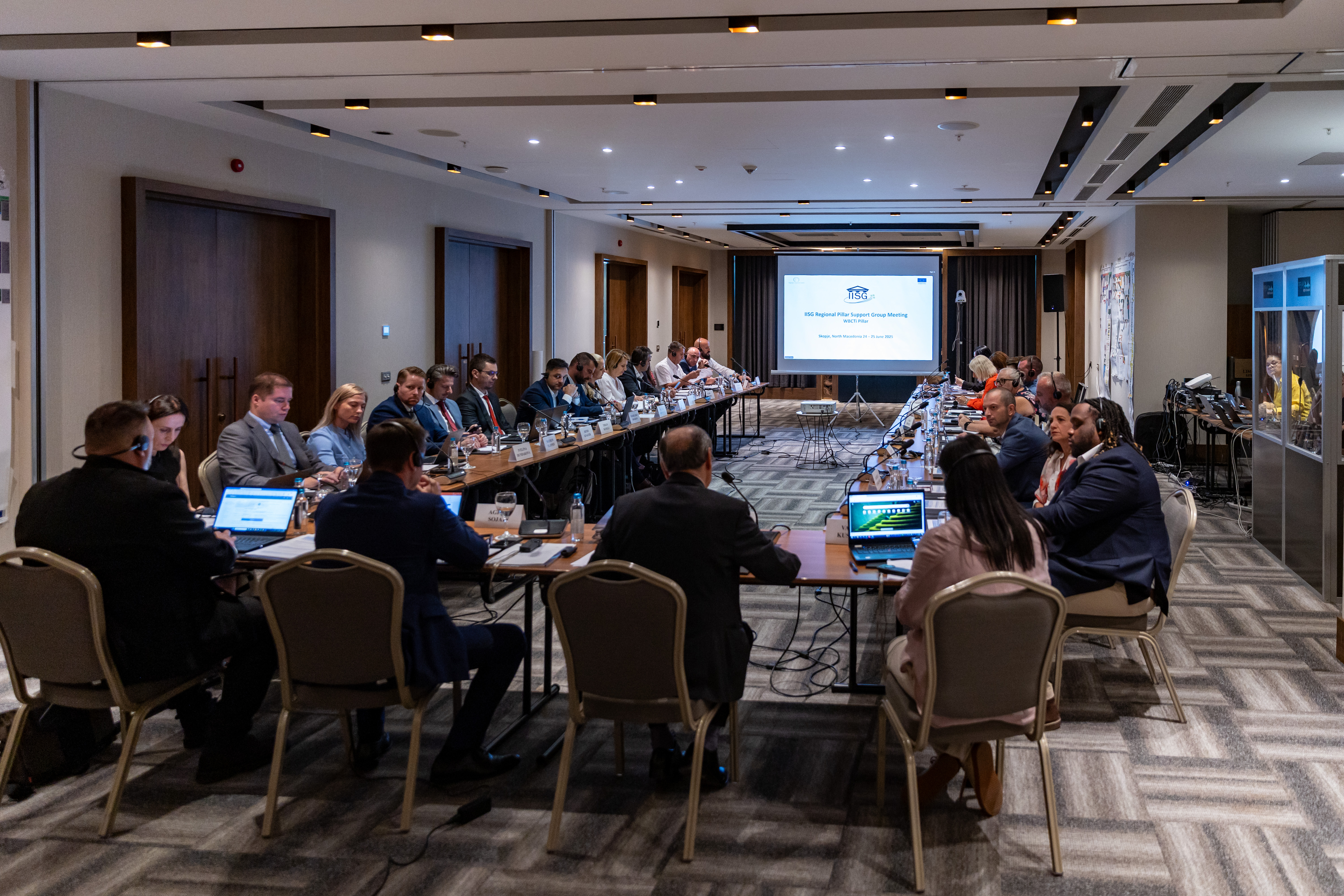
IISG Regional Pillar Support Group Meeting for Pillar 1 – WBCTi held in Skopje on 24-25 June 2025 (Photo: RCC/IISG)
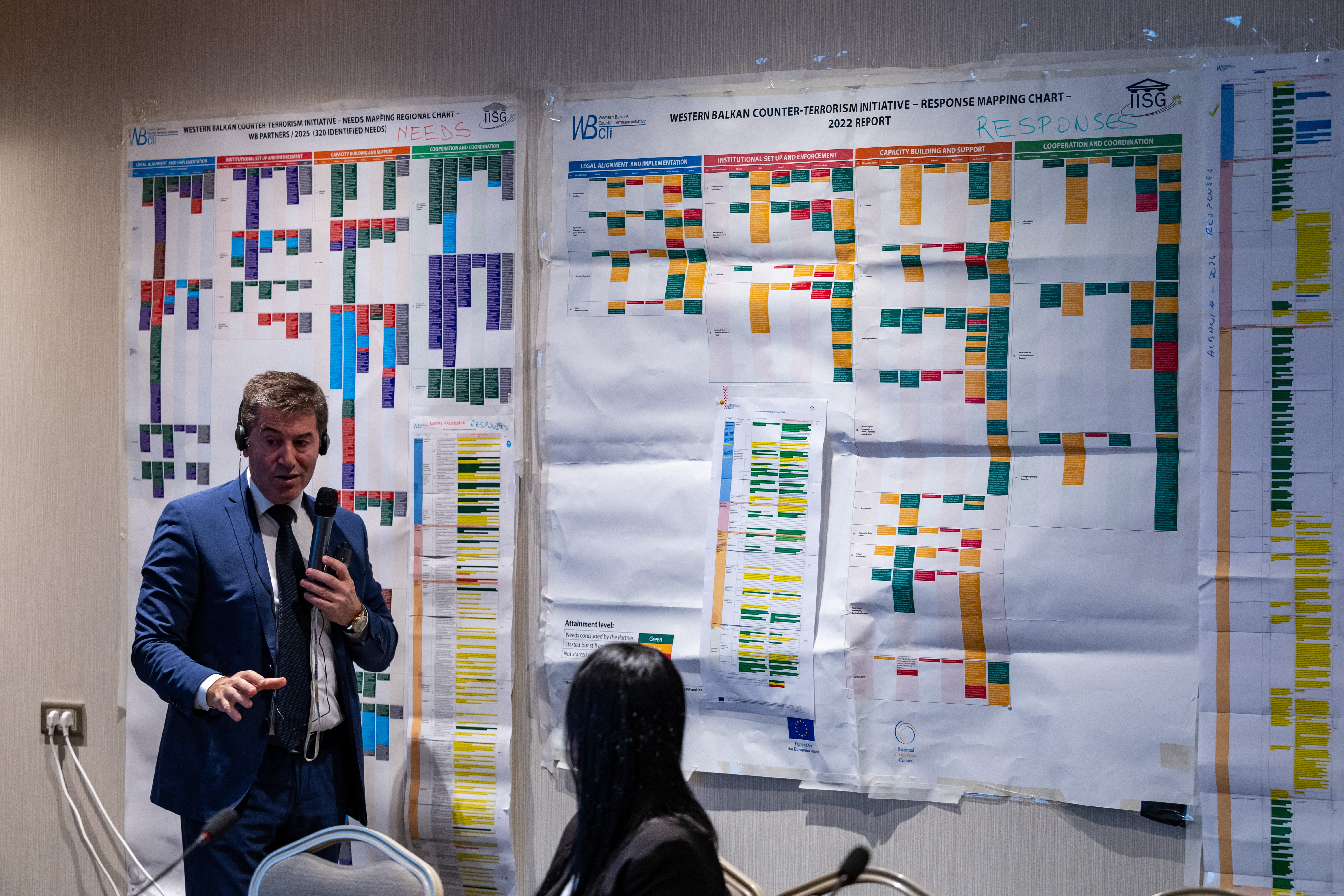
Head of RCC's IISG Agron Sojati at the Regional Pillar Support Group Meeting for Pillar 1 in Skopje (Photo: RCC/IISG)

RCC's IISG organized the Regional Pillar Support Group Meeting for the Western Balkans Counter-Terrorism Initiative (WBCTi), bringing together representatives of the Western Balkan Six partners, the European Commission, and international organizations in Skopje (Photo: RCC/IISG)
Skopje – The Integrative Internal Security Governance (IISG) organised the Regional Pillar Support Group Meeting under the Western Balkan Counter-Terrorism initiative (WBCTi) on 24–25 June 2025 in Skopje.
The meeting brought together representatives of the Western Balkans Six, the European Commission, European Union (EU) agencies and international organisations to review progress in counter-terrorism and preventing and countering violent extremism (CT-P/CVE), discuss the latest needs and response mapping, and prepare for implementation of the new Joint Action Plan (JAP).
Opening the meeting, Agron Sojati, Head of IISG, thanked partners for their active engagement and highlighted IISG’s role in facilitating data collection, analysis and coordination to support evidence-based policies and operational responses.
Pavle Trajanov, CT-P/CVE Coordinator from North Macedonia, noted that although the assessed terrorism threat level remains low, continued vigilance and stronger inter-institutional cooperation remain important. He also highlighted ongoing work to develop new cooperation protocols with support from international partners.
Participants reviewed regional priorities and ongoing projects, and discussed how identified needs could be aligned with the objectives of the forthcoming JAP. Particular attention was devoted to strengthening information exchange, monitoring and reporting mechanisms.
Participants reaffirmed their commitment to coordinated regional action in addressing terrorism and violent extremism across the Western Balkans Six.