



Regional coordinators in Skopje prepare implementation roadmaps for new Joint Action Plan
15 October 2025
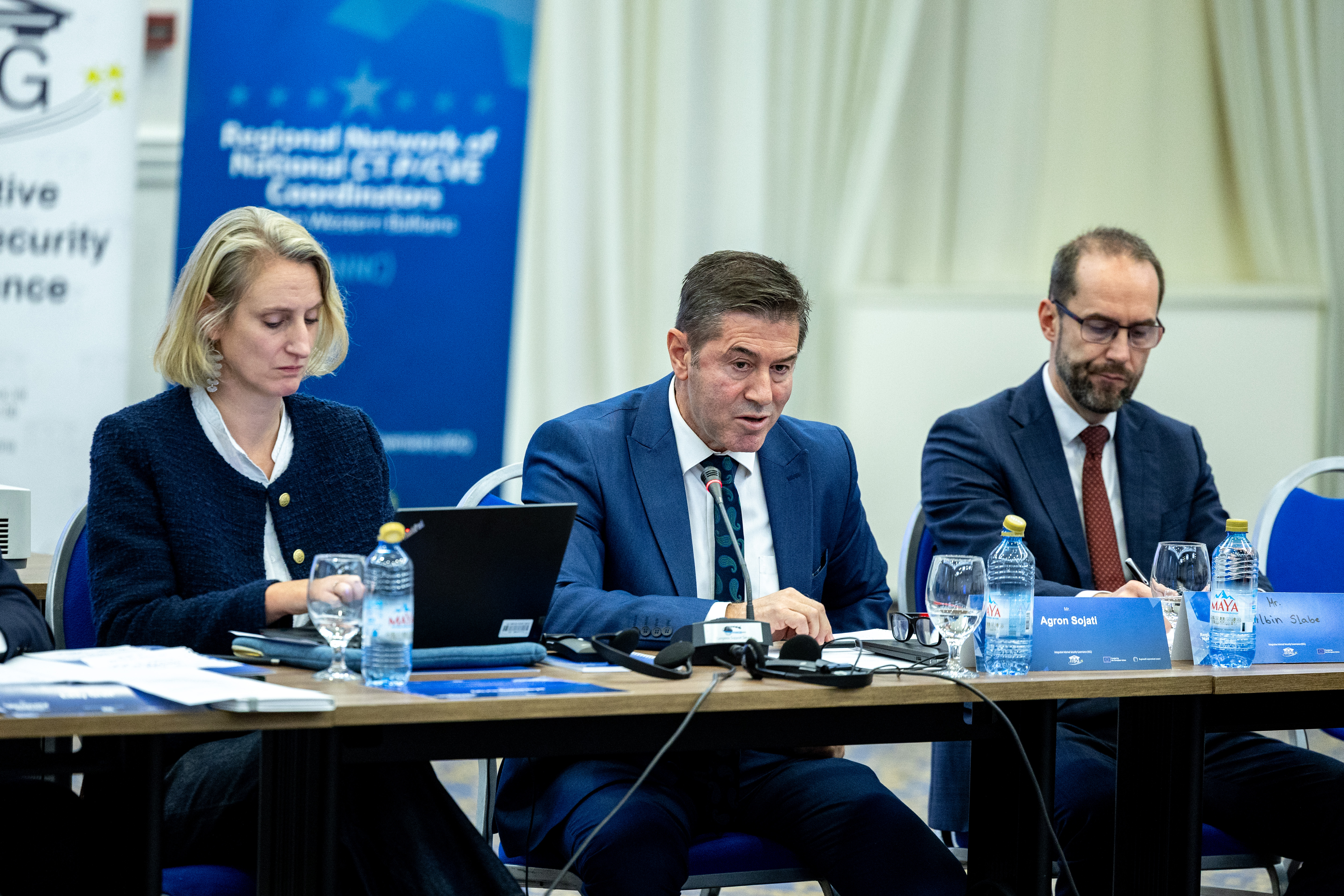
18th Regional Network of National CT-P/CVE Coordinators (RNNC) Meeting on 15 October 2025 in Skopje (Photo: RCC/IISG)
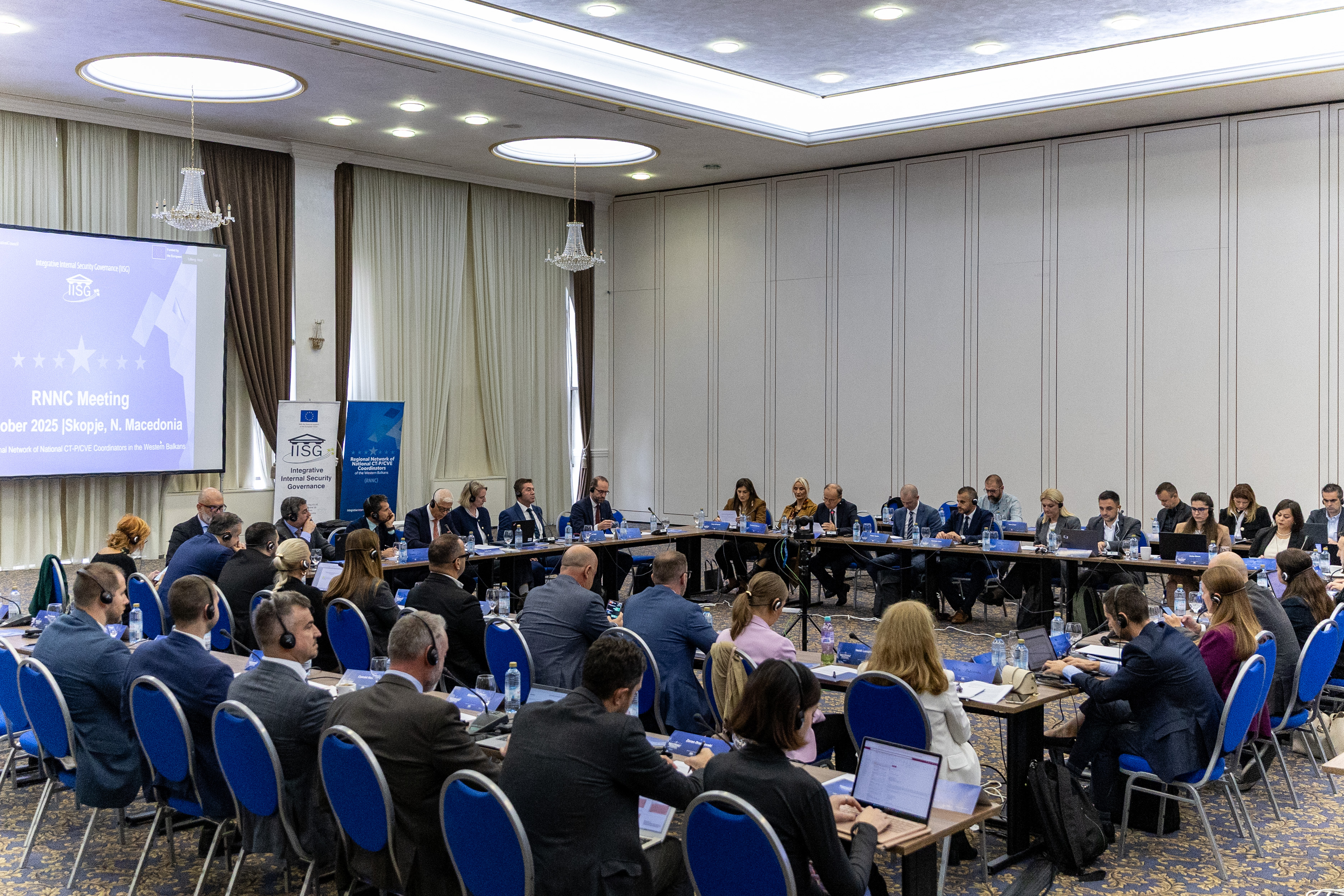
18th RNNC Meeting gathered WB CT-P/CVE Coordinators, representatives from EU and international partners, as well as from regional organizations (Photo: RCC/IISG)
Skopje – The Integrative Internal Security Governance (IISG) organised a coordinators’ meeting and the 18th meeting of the Regional Network of National Counter-Terrorism and Preventing and Countering Violent Extremism Coordinators (RNNC) on 14–15 October 2025 in Skopje.
The meetings brought together counter-terrorism and preventing and countering violent extremism (CT-P/CVE) coordinators from the Western Balkans Six, representatives of the European Commission, European Union (EU) agencies, international organisations and regional partners.
Eddy Greif, EU Regional Security Advisor, opened the RNNC meeting, while Pavle Trajanov, CT-P/CVE Coordinator from North Macedonia, welcomed participants and highlighted online radicalisation, misuse of artificial intelligence and links between organised crime and terrorism among the key challenges requiring continued regional cooperation.
Giovanni Cioffi from the European Commission’s Directorate-General for Migration and Home Affairs (DG HOME) presented the new Joint Action Plan (JAP) and its implementation arrangements. Olivia Debaveye and David Beso from the Directorate-General for Enlargement and Eastern Neighbourhood (DG ENEST) outlined relevant EU support and plans to assist Western Balkans Six partners in developing their implementation roadmaps.
Agron Sojati, Head of IISG, presented IISG’s role in mapping CT-P/CVE needs, monitoring implementation and supporting reporting through the IISG Database. Participants validated the roadmap methodology, agreed on the reporting template and key performance indicators, and discussed the development of partner-specific and regional roadmaps for 2026–2030.
The meeting also addressed financing of terrorism, online radicalisation, disinformation, access to electronic evidence, critical infrastructure protection and capacity-building support. Regional and international partners presented related initiatives and tools supporting implementation of the JAP.
Participants agreed to finalise and circulate the validated templates and indicators by the end of 2025, enabling the preparation of the implementation roadmaps in early 2026. The meetings reaffirmed the RNNC’s role as a regional platform for coordination, information exchange and joint responses to terrorism and violent extremism across the Western Balkans Six.