

Youth Lead the Way in Tackling Disinformation and Strengthening Media Literacy in the Western Balkans
03 November 2026
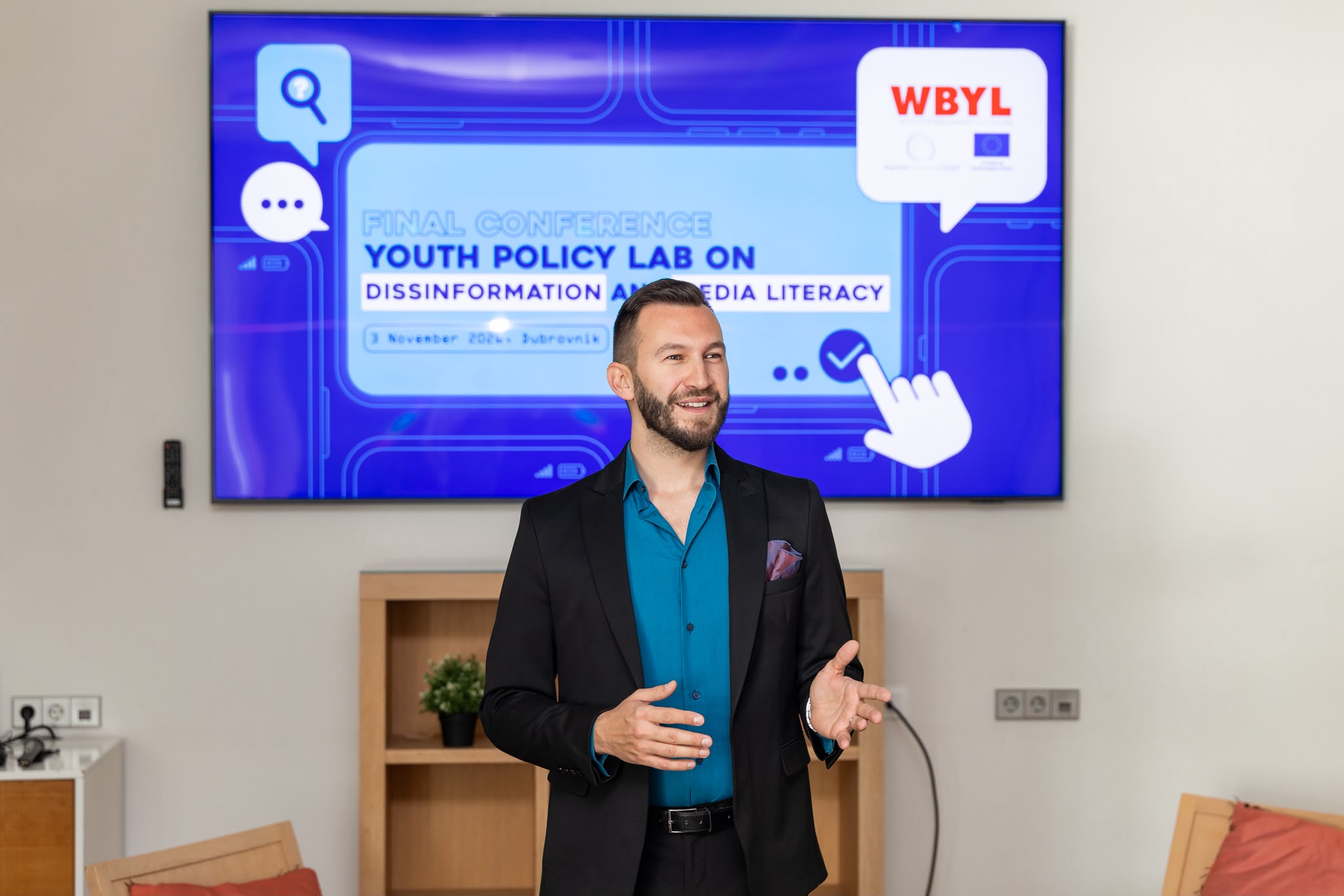
Ognjen Marković, Western Balkans Youth Lab 2 Project (WBYL2) Team Leader opening the Conference of the Youth Policy Lab on Disinformation and Media Literacy in Dubrovnik on 3 November 2026 (Photo: RCC/Grgo Jelavic)
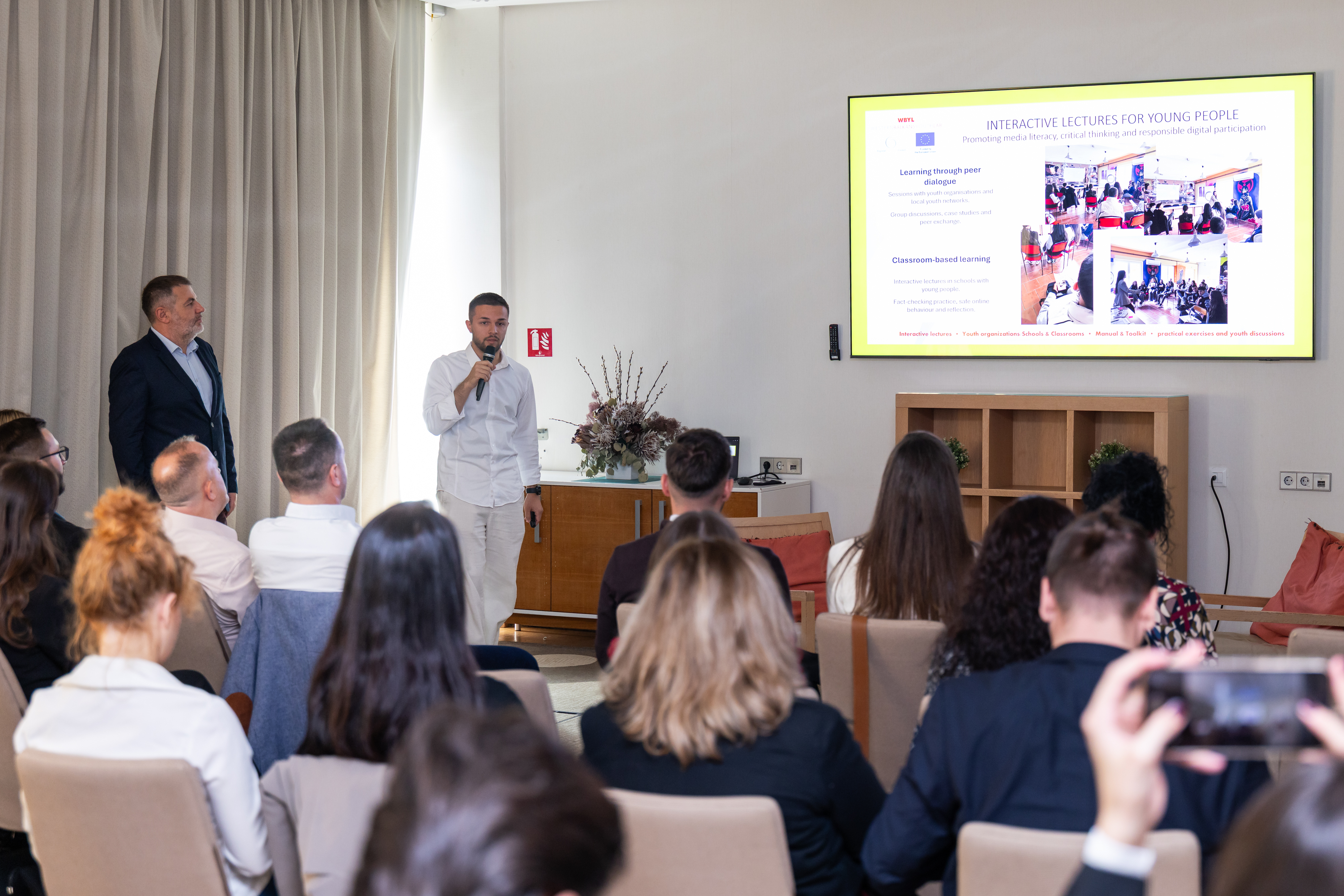
The Final Conference of the Youth Policy Lab on Disinformation and Media Literacy held on 3 November 2026 in Dubrovnik (Photo: RCC/Grgo Jelavic)
Dubrovnik – The Final Conference of the Youth Policy Lab on Disinformation and Media Literacy, organised by the EU-funded and Regional Cooperation Council (RCC) implemented Western Balkans Youth Lab Project 2 (WBYL2), was held in Dubrovnik today, bringing together young people, policymakers, institutional representatives and partners to present youth-led solutions for addressing disinformation and strengthening media literacy across the region.
“Once again, the Youth Policy Lab has demonstrated that meaningful youth participation is not just a principle we advocate for, but a process that works and delivers tangible results. When young people are genuinely involved in shaping policies, their perspectives, knowledge and recommendations translate into more relevant, responsive and impactful solutions. Addressing disinformation and strengthening media literacy must be a priority, not only because of the challenges we face today, but because the information environment will become increasingly complex with the rapid development of artificial intelligence and digital technologies. Young people must be equipped to navigate this reality but also empowered to actively shape the responses to it,” said Ognjen Marković, WBYL2 Team Leader during his opening remarks.
Throughout the Youth Policy Lab, Working Groups across the Western Balkans Six contributed to a range of concrete, educational and policy outputs. These included:
- research study on young people’s skills in using AI tools accompanied by a dedicated bootcamp, and the development of a Code of Conduct for social media influencers;
- study Youth in the Media and Media Among Youth, followed by a promotional campaign;
- manual on Media Literacy and Disinformation for Youth, accompanied by a practical toolkit addressing media literacy, cyberbullying and hate speech;
- research study on youth representation in media, followed by workshops and signing of MoU with media outlets;
- development of a high school media literacy curriculum for an elective course;
- research on youth digital behaviour and AI use, complemented by training sessions, workshops and a digital campaign.
Through this process, young people worked alongside policymakers, regional regulatory agencies and experts to translate identified challenges into practical outputs and policy-relevant solutions. The results demonstrate the value of the Youth Policy Lab’s co-creation and co-management approach, in which young people are not merely consulted but actively contribute to shaping policies and responses to issues affecting their lives.
The conference marked the completion of the fourth Youth Policy Lab under WBYL2, following the successful Labs on Youth Unemployment, Mental Health and the Green Agenda. It reinforces the importance of sustained regional cooperation and meaningful youth participation in addressing complex and evolving challenges, ensuring that young people’s voices and contributions remain an integral part of policy development across the Western Balkans.
***
The Regional Cooperation Council (RCC)’s Western Balkans Youth Lab 2 (WB Youth Lab 2) is an EU-funded project that promotes a sustained and structured regional dialogue between young people and policy-makers.
More on the project - www.rcc.int/youthlab