

RCC SecuriMeter 2026: Western Balkans citizens feel safer, but everyday concerns persist
18 November 2026
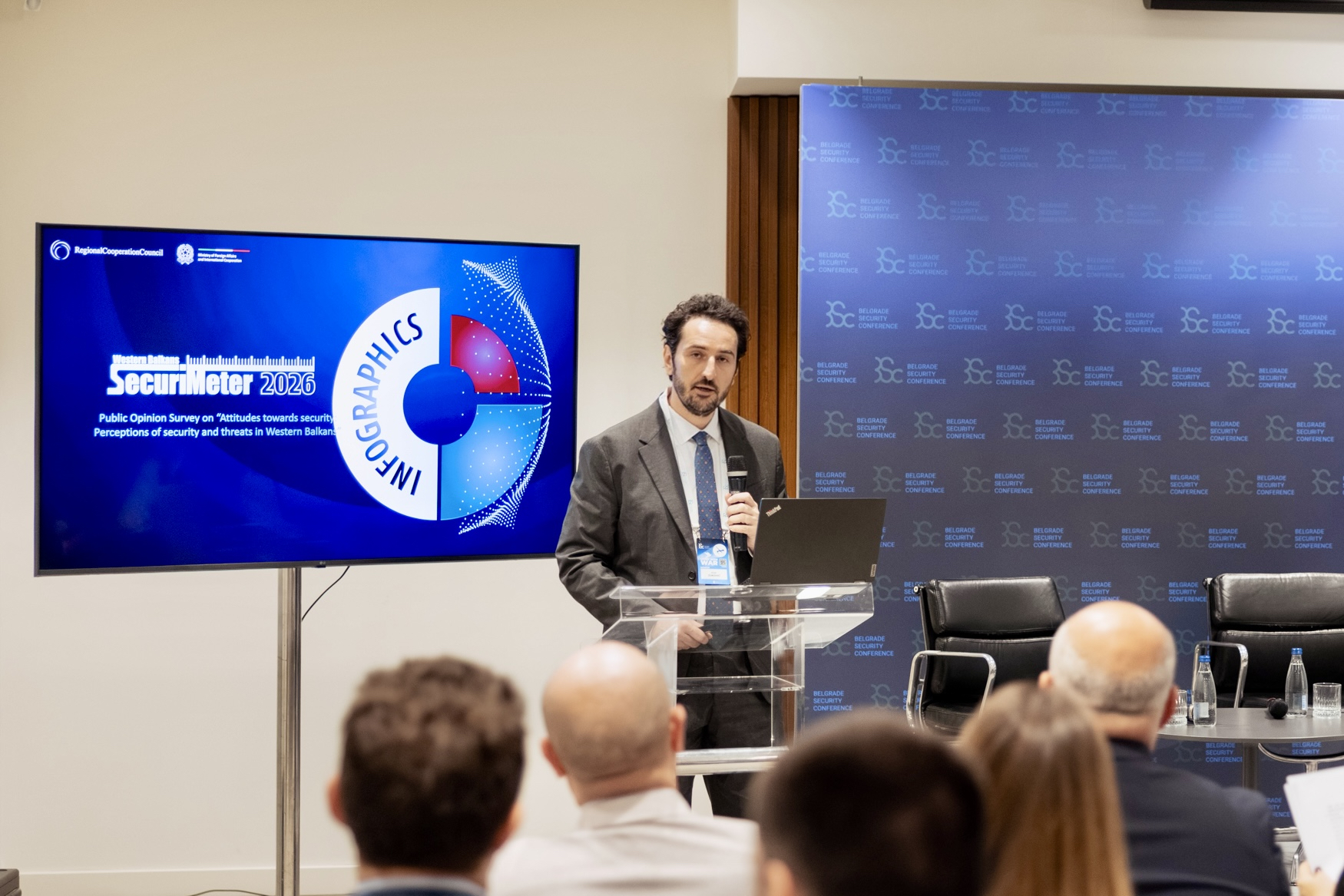
RCC Senior Security Advisor Aner Zuković presented SecuriMeter 2026 key findings in Belgrade on 18 November 2026 (Photo: RCC/Nikola Radojicic)
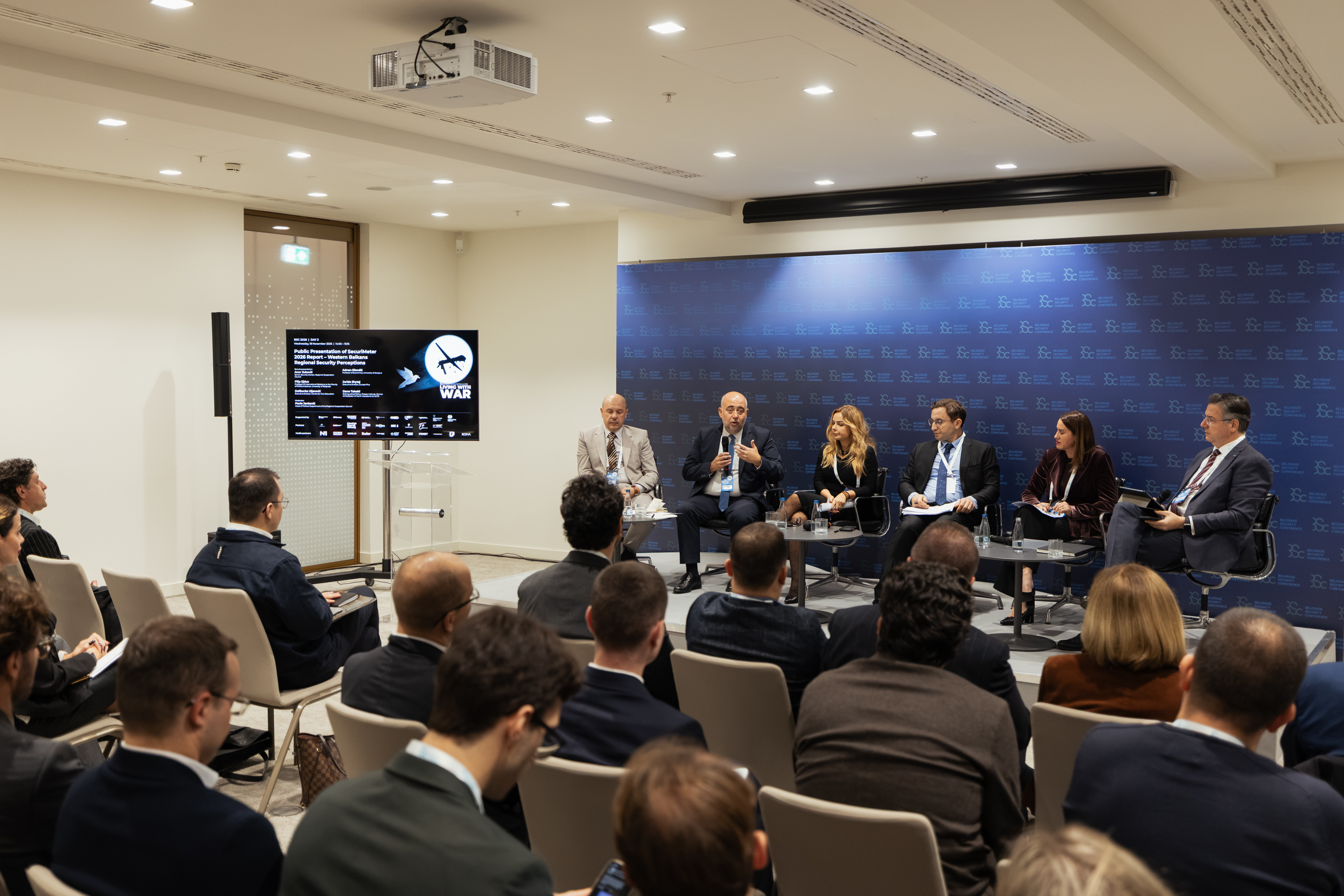
Presentation of RCC SecuriMeter 2026 survey findings took place on 18 November 2026 in Belgrade (Photo: RCC/Nikola Radojcic)
New RCC survey presented today reveals growing perceptions of security, while living costs, emigration, corruption and digital threats remain major concerns
Belgrade – People across the Western Balkans Six feel safer than a year ago, yet rising living costs, emigration, disinformation and cybercrime continue to shape their sense of security, according to the 2026 SecuriMeter, the Regional Cooperation Council’s (RCC) annual survey on public perceptions of security, presented today at an event within the Belgrade Security Conference.
The findings reveal a region where perceptions of security are improving, but where security is increasingly understood through the lens of everyday life, economic stability, trust in institutions and confidence in the future. Almost half of respondents (49%) now consider the Western Balkans a secure place to live, up from 38% in 2025, while 64% report relatively high levels of personal security. However, concerns remain widespread: 83% worry about the cost of living and inflation, 78% about depopulation and emigration, 72% about disinformation and fake news, 70% about cybercrime and online fraud, and 68% about organised crime.
“Security is not only about protecting people from traditional threats. It is also about whether they can afford to live with dignity, trust the institutions meant to protect them and see a future for themselves and their families in this region. SecuriMeter gives us something essential: a clearer understanding of what people actually fear and expect. For the RCC, these findings are an important evidence base for identifying shared challenges, encouraging dialogue and supporting regional responses that make a difference in people’s lives,” said Pavle Janković, Head of the RCC Political Department, who moderated the discussion.
One of the most striking findings concerns the region’s younger generation. While 65% of respondents have no intention of moving abroad, 58% of young people aged 18-24 are considering leaving to live or work elsewhere. Economic insecurity adds to these concerns, with only one in three respondents saying they could cover an unexpected expense of €1,000 without borrowing or relying on others. At the same time, 55% have little or no confidence in their community’s ability to recover from a serious crisis.
Presenting the findings, Aner Zuković, RCC Senior Security Advisor, highlighted the relationship between perceptions of safety, economic pressures and institutional confidence.
“What stands out this year is the contrast between improving perceptions of security and persistent concerns about everyday life. People may feel safer in their immediate surroundings, but that does not necessarily mean they feel secure about their future. When more than eight in ten are concerned about living costs and more than half of young adults are considering moving abroad, we need to recognise that economic security, opportunity and resilience are integral to the broader security picture. These are not separate conversations. They are interconnected challenges that require informed and coordinated responses,” said Zuković.
The presentation was followed by a discussion bringing together Adnan Efendić, Professor of Economics at the University of Sarajevo; Jorida Shytaj, Executive Director of Europe Plus; Filip Ejdus, Professor of International Relations at the Faculty of Political Science, University of Belgrade; Daliborka Uljarević, Executive Director of the Centre for Civic Education; and Dane Taleski, Distinguished Fellow at the Prespa Institute and former Ambassador of North Macedonia to NATO.
The discussion explored the implications of citizens’ security concerns for institutional trust, economic resilience and regional cooperation, highlighting the importance of evidence-based responses to shared challenges.
The survey also reveals continuing challenges related to corruption, institutional trust and equal treatment. More than three-quarters of respondents (77%) consider corruption widespread in their economy, although this represents a decline from 86% in 2023. More than half (52%) disagree that public institutions treat people equally, while confidence in political parties stands at just 16%, the lowest among the institutions surveyed. Digital security and the reliability of information are another major source of concern. Nearly three-quarters (74%) worry about the theft of their personal information, while 72% are concerned about its misuse by private companies or online platforms. The survey also examines perceptions of organised crime, illegal firearms, migration and international security challenges. More than half of respondents (53%) feel threatened by the illegal possession and misuse of weapons in their neighbourhood, although 84% say they would not consider owning a gun. Attitudes towards immigration remain divided, with 48% believing immigration increases crime and 21% recognising immigrants’ contribution to filling important jobs. These findings reflect public perceptions rather than verified impacts of immigration.
Through SecuriMeter, the RCC continues to bring citizens’ perspectives into regional security discussions, providing policymakers, institutions, researchers and international partners with comparative data to help inform decisions and strengthen cooperation across the Western Balkans Six.
The 2026 SecuriMeter survey was conducted between 1 and 17 September 2026 and involved 6,003 adults across the Western Balkans Six. Interviews were conducted face-to-face using computer-assisted personal interviewing (CAPI). The questionnaire included 42 thematic and 17 screener and demographic questions.