

RCC Secretary General at Antalya Forum: Peace in the Balkans is Built Through Connectivity, Opportunity, and Dialogue
18 April 2026
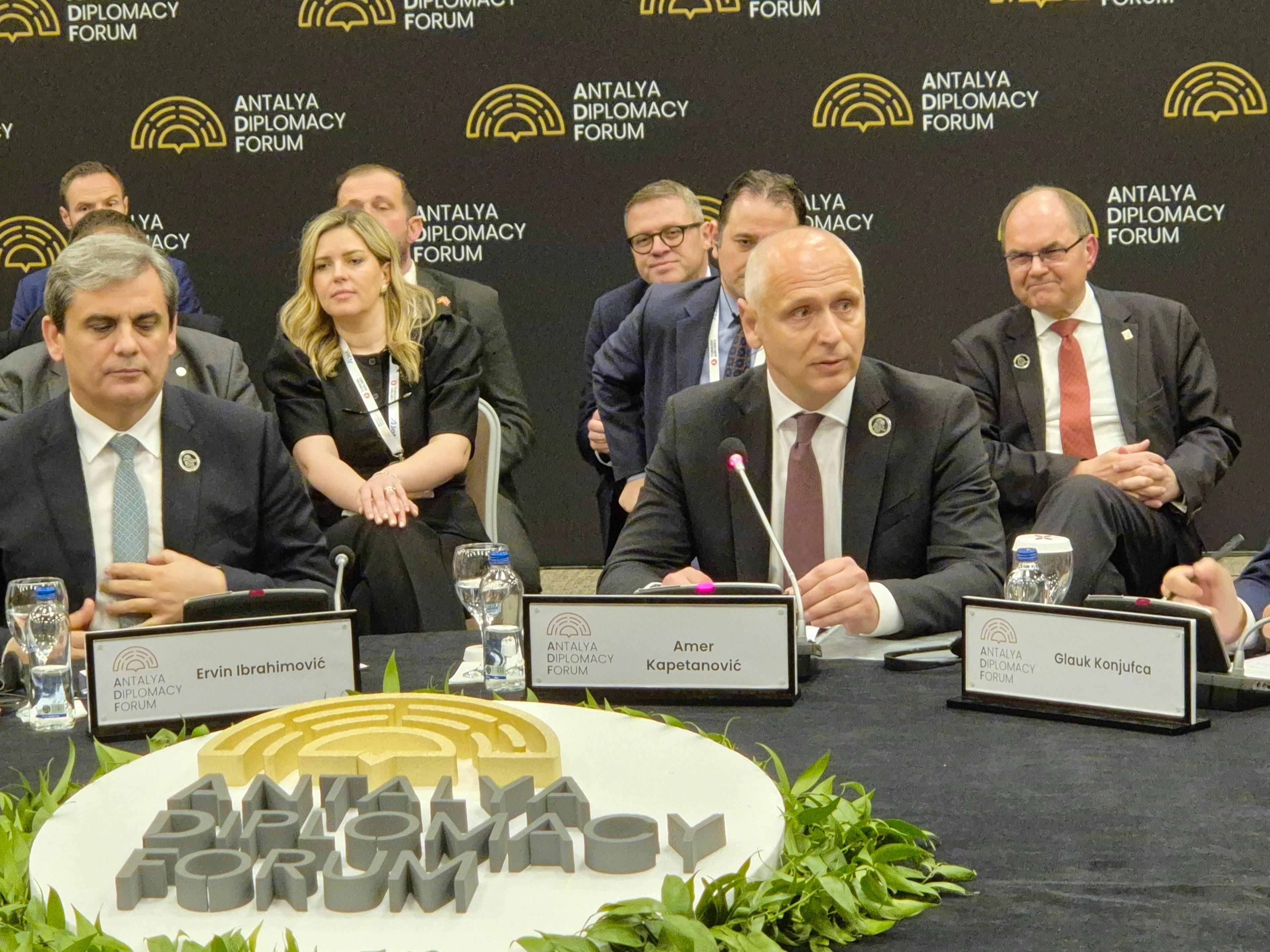
RCC Secretary General Amer Kapetanovic moderated the high-level panel discussion “Harvesting Peace in the Balkans: Dialogue, Business, and Connectivity.” at the fifth Antalya Diplomacy Forum on 18 April 2026 (Photo: RCC/Marko Radovanovic)
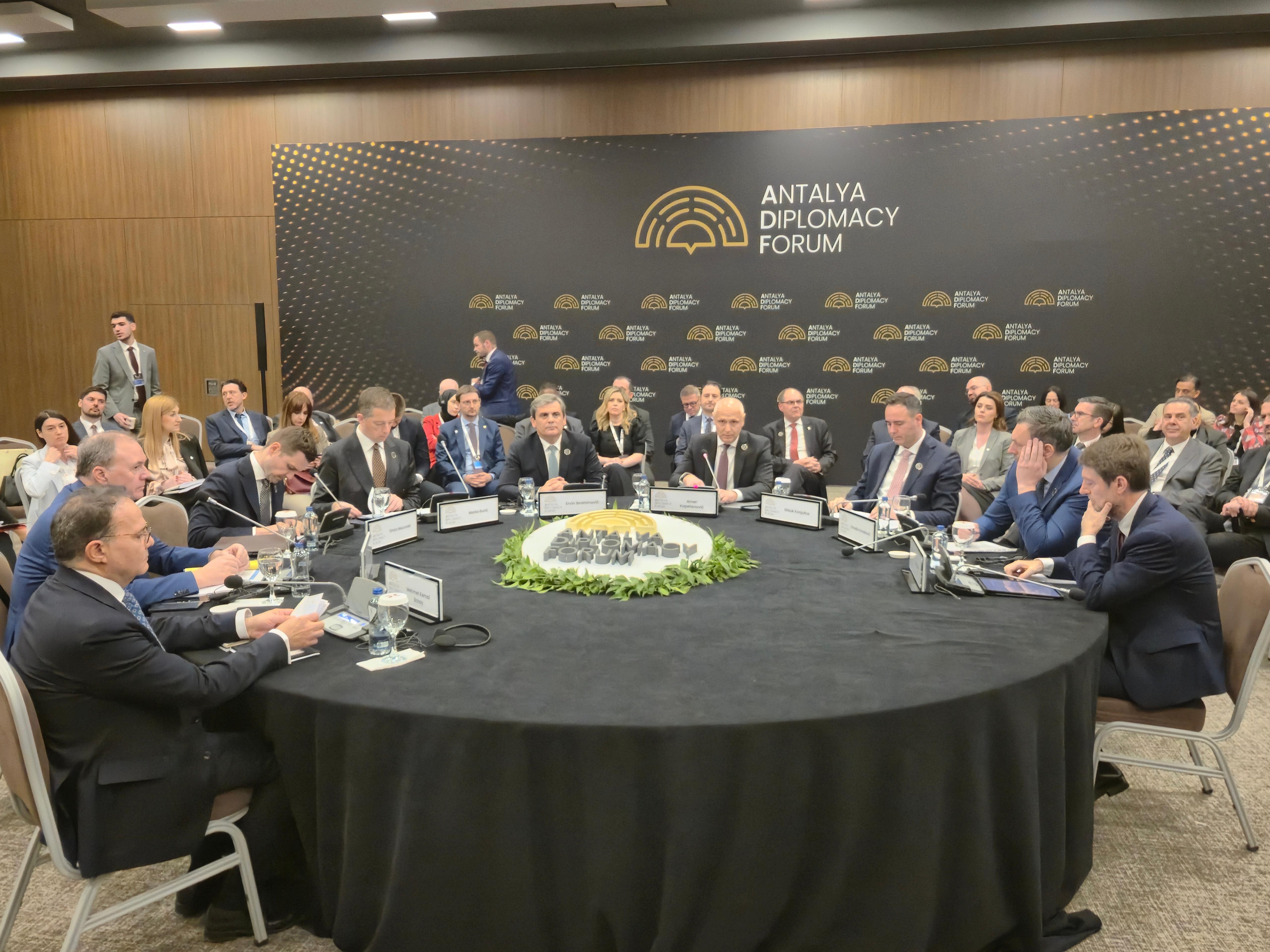
RCC Secretary General, Amer Kapetanović, participated in the Antalya Diplomacy Forum 2026 on 18 April 2026 (Photo: RCC/Marko Radovanovic)
RCC Secretary General opens discussion on regional dialogue, business, and connectivity at the Antalya Diplomacy Forum 2026
Antalya/Sarajevo – The Regional Cooperation Council (RCC) Secretary General, Amer Kapetanović, participated in the Antalya Diplomacy Forum 2026, held in Antalya from 17 to 19 April 2026, where he moderated the high-level panel discussion “Harvesting Peace in the Balkans: Dialogue, Business, and Connectivity.”
The panel explored how dialogue, business cooperation, and connectivity can contribute to lasting stability, stronger regional ownership, and greater prosperity in the region. The discussion focused on practical cooperation in areas such as transport, trade, energy, security, digital links, mobility, and broader regional connectivity as key drivers of sustainable growth and stability.
“Peace in the Balkans cannot be sustained by declarations alone. It must be built through roads that connect us, markets that create opportunity, institutions that cooperate, and dialogue that continues even when it is difficult. Regional cooperation is not abstract diplomacy; it is how stability becomes visible in the daily lives of our citizens,” said RCC Secretary General Amer Kapetanović.
Bringing together the Deputy Prime Minister for International Relations and Minister of Foreign Affairs of Montenegro, Ervin Ibrahimović; First Deputy Prime Minister and Minister of Foreign Affairs and Diaspora of Kosovo*, Glauk Konjufca; Minister of Foreign Affairs of Bosnia and Herzegovina, Elmedin Konaković; Minister of Foreign Affairs of Serbia, Marko Đurić; Minister of Foreign Affairs and Foreign Trade of North Macedonia, Timčo Mucunski; Minister for Europe and Foreign Affairs of Albania, Ferit Hoxha; Deputy Minister of Foreign Affairs of Türkiye and Director for EU Affairs, Mehmet Kemal Bozay; and State Secretary of the Ministry of Foreign and European Affairs of Croatia, Frano Matušić, the session also addressed the importance of regional dialogue, concrete cooperation, and inclusive regional initiatives such as the Balkans Peace Platform, the RCC-coordinated Common Regional Market, and the South East Europe 2030 Strategy in turning shared interests into tangible results for citizens across the region.
While attending the Antalya Diplomacy Forum, Secretary General Kapetanović held bilateral meetings with the Minister for Europe and Foreign Affairs of Albania, Ferit Hoxha; Minister of Foreign Affairs of Serbia, Marko Đurić; and Deputy Managing Director for Western Europe at the European External Action Service, Emanuele Giaufret. The meetings focused on regional cooperation, current challenges, and the importance of maintaining dialogue and advancing common regional agendas. Secretary General Kapetanović is scheduled to meet Deputy Minister of Foreign Affairs of Türkiye, Mehmet Kemal Bozay, on the sidelines of the forum tomorrow.
The fifth edition of the Antalya Diplomacy Forum, themed “Mapping Tomorrow, Managing Uncertainties,” brought together leaders, policymakers, diplomats, academics, business experts, media, and civil society representatives to discuss growing geopolitical unpredictability, shifting balances of power, and rising trade barriers, while exploring how best to manage uncertainties and address pressing issues in preparation for future challenges.
*This designation is without prejudice to positions on status, and is in line with UNSCR 1244/1999 and the ICJ Opinion on the Kosovo declaration of independence.