


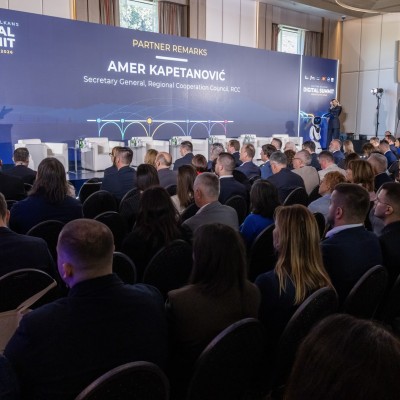
RCC with ELIAMEP at GLOBSEC on security and opportunity through regional cooperation and EU enlargement
22 May 2026
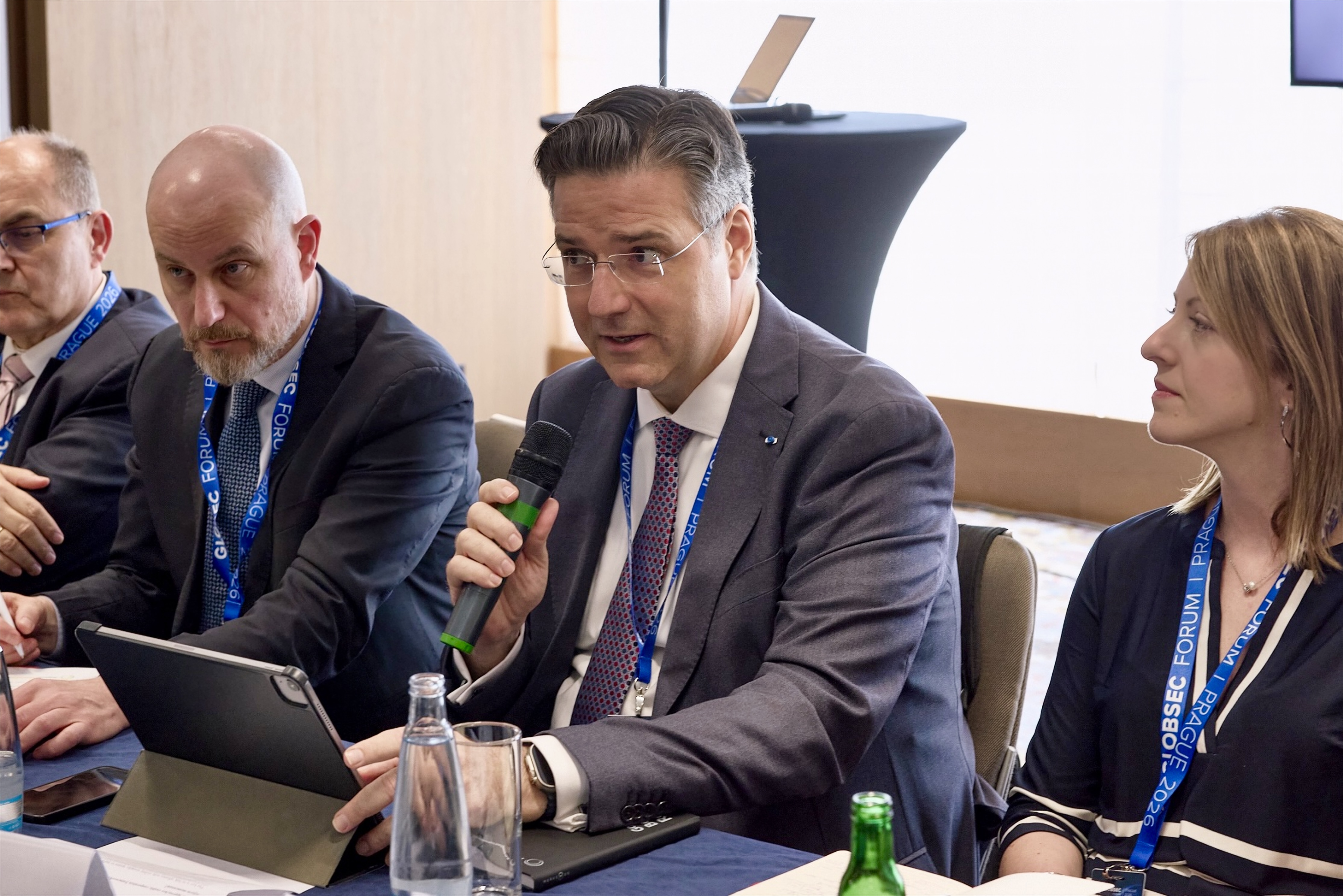
RCC's Head of Political Department Pavle Jankovic at the RCC co-hosted panel on the sidelines of GLOBSEC, in Prague on 22 May 2026 (Photo: GLOBSEC)
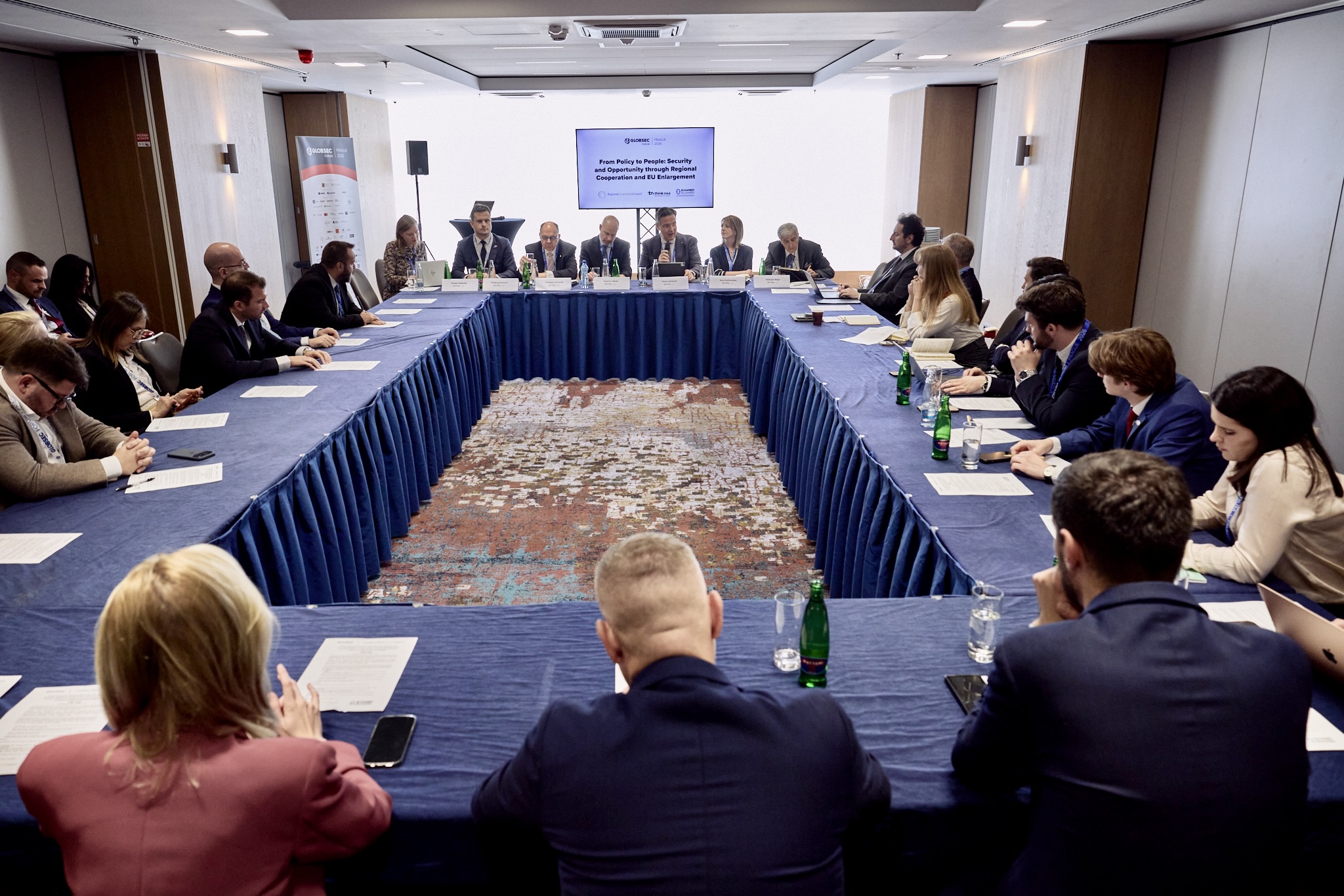
RCC and ELIAME co-hosted the side event “From Policy to People: Security and Opportunity through Regional Cooperation and EU Enlargement” on the sidelines of GLOBSEC, on 22 May 2026 in Prague (Photo: GLOBSEC)
Prague - The Regional Cooperation Council (RCC), together with the Hellenic Foundation for European & Foreign Policy (ELIAMEP), co-hosted the side event “From Policy to People: Security and Opportunity through Regional Cooperation and EU Enlargement” today at the GLOBSEC Forum 2026 in Prague.
The event brought together policymakers, experts, academics, and practitioners to discuss how EU enlargement and regional cooperation can deliver more visible benefits for citizens, strengthen security, support economic convergence, and contribute to a more resilient South East Europe and Europe as a whole. The discussion focused particularly on the Western Balkans, a region already deeply connected with Europe politically, economically, and in security terms.
In addition to Pavle Janković, Head of the Political Department at RCC, the panel brought together Vladimír Bilčík, Senior Fellow at GLOBSEC; Christian Schmidt, High Representative for Bosnia and Herzegovina; Dr Predrag Zenović, Chief Negotiator of Montenegro; Hüseyin Bağcı, Professor at the Middle East Technical University; Dr. Ana Krstinovska, Research Fellow at ELIAMEP, and Frauke Seebass, Visiting Fellow at the German Institute for International and Security Affairs.
Participants discussed how regional cooperation can make EU integration more concrete and visible to citizens by opening markets, connecting institutions, building trust and solving practical problems ahead of accession. They also highlighted the importance of linking reforms with economic opportunities, institutional trust and human security, so that enlargement is understood not only as a geopolitical process, but as a way to improve people’s daily lives.
During his intervention, Janković stressed that South East Europe, particularly the Western Balkans Six, is already politically, economically and security-wise connected with the rest of Europe, sharing many of the same challenges, from hybrid threats and disinformation to energy pressures and demographic decline.
“The question is therefore not whether the Western Balkans Six are relevant for Europe’s future. They are. The real question is whether Europe can afford to leave part of its immediate neighbourhood fragmented, exposed, and waiting for too long,” said Janković.
Concrete results of regional cooperation through RCC-coordinated agendas, including the abolition of roaming charges within the WB6, lower EU-WB6 data roaming costs, Green Lanes facilitating trade, travel with ID cards, and progress on mutual recognition of professional qualifications, were noted as practical examples of Europe becoming closer before formal membership.
The discussion concluded that credible enlargement, stronger institutions, economic convergence, digital and cyber resilience, energy connectivity, and rule of law must go hand in hand. Regional cooperation, participants agreed, remains essential to ensuring that future EU accession does not create new dividing lines, but strengthens the region’s overall resilience, connectivity and European future.