




9th meeting of the South East Europe Judicial Training Institutes Network: Digital Justice and AI in South East Europe
03 June 2026
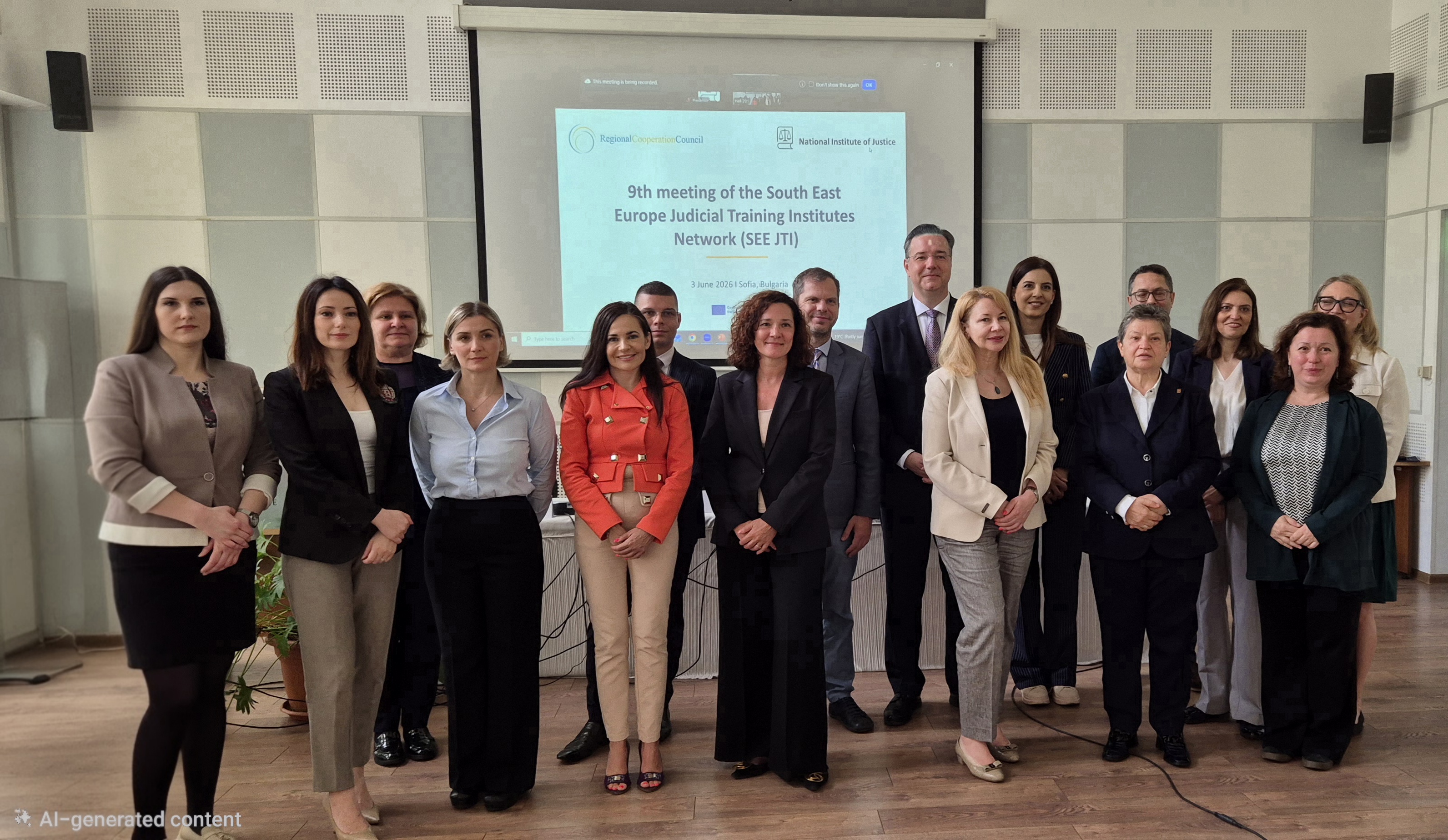
9th meeting of the South East Europe Judicial Training Institutes Network: Digital Justice and AI in South East Europe in Sofia on 3 June 2026 (Photo: RCC/Natasa Mitrovic)
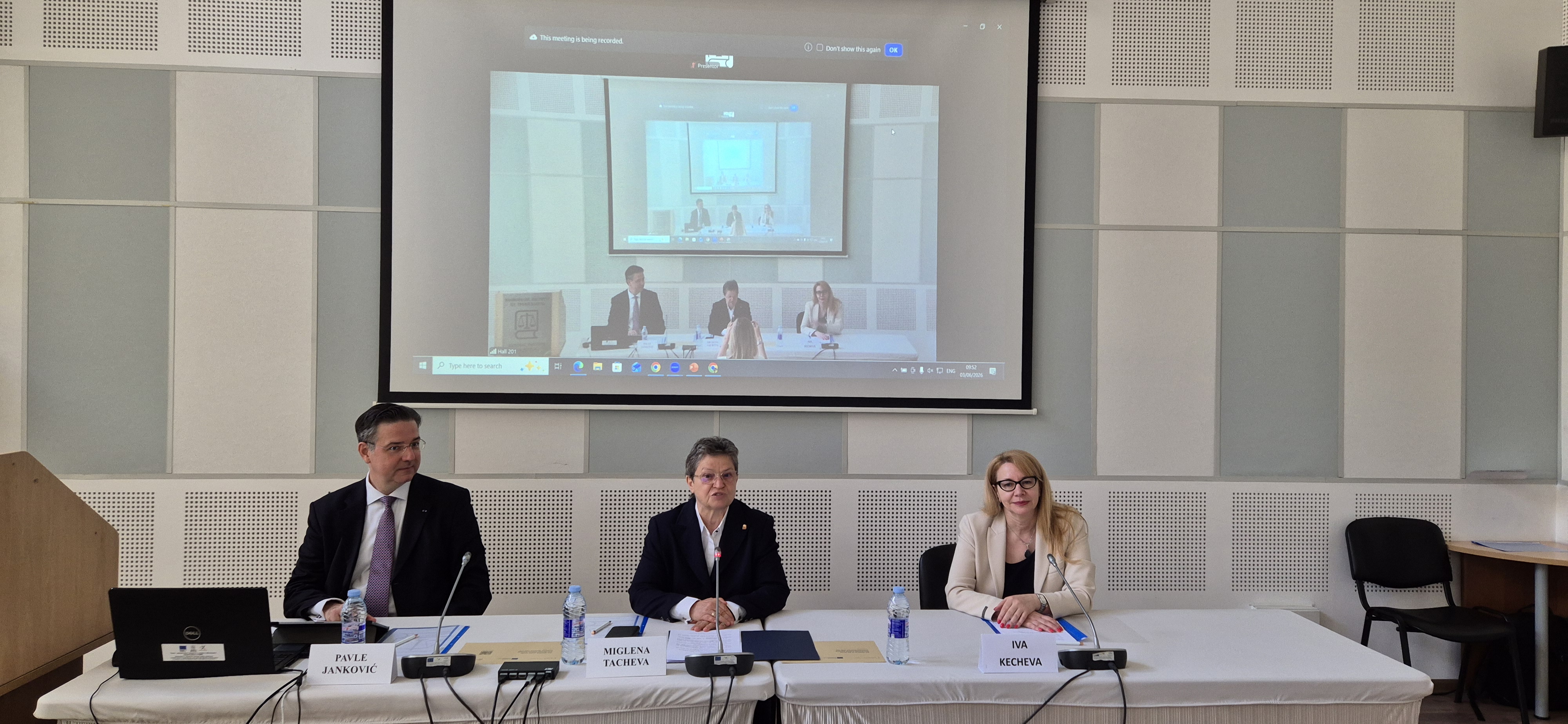
Pavle Jankovic, RCC Head of Political Department, Miglena Tacheva, Director of Institute of Justice of Bulgaria, and Iva Kecheva, Deputy Minister of Justice of Bulgaria at 9th meeting of the South East Europe Judicial Training Institutes Network (Photo: RCC/Natasa Mitrovic)
The ninth meeting of the South East Europe Judicial Training Institutes (SEE JTI) Network was held today in Sofia, hosted by the Regional Cooperation Council (RCC) in cooperation with the Institute of Justice of Bulgaria.
The meeting brought together representatives of judicial training institutions, judges, prosecutors, and experts from across the region to discuss the growing importance of digitalisation and artificial intelligence (AI) in modern justice systems. Participants explored how emerging technologies can support legal workflows, improve access to justice, and enhance the efficiency and quality of judicial decision-making, while carefully addressing associated risks and challenges.
Discussions also focused on strengthening the capacities of judicial institutions to respond to digital transformation, promoting the exchange of good practices in judicial training, and advancing regional judicial cooperation. Particular attention was given to the legal, ethical, and fundamental rights implications of digitalisation and the use of trustworthy AI in the justice sector.
Opening the meeting, Pavle Janković, Head of the Political Department at the Regional Cooperation Council (RCC), highlighted the importance of regional collaboration in navigating these changes saying “We are witnessing a profound transformation in the administration of justice. Digital technologies are reshaping not only how institutions communicate and cooperate, but also how judges, prosecutors, and judicial staff carry out their daily work. At the same time, artificial intelligence is emerging as a powerful tool with the potential to transform judicial processes, legal analysis, access to justice, and cross-regional cooperation. These developments create significant opportunities to improve efficiency, transparency, accessibility, and the speed of judicial cooperation. In this context, regional cooperation and shared learning are not optional – they are essential.”
Deputy Minister of Justice of Bulgaria, Iva Kecheva, in her address to the participants, emphasised that: “Judicial training must respond to the realities of a rapidly changing world, where new technologies, artificial intelligence, and cybersecurity have already become an integral part of everyday legal practice”. She underlined that continuous learning, innovation, and international cooperation are essential for the development of modern judicial systems. According to her, the South East Europe Judicial Training Institutes Network has established itself as an important forum for the exchange of experience and best practices, supporting the professional development of young judges, prosecutors, and investigators across the region.
Director of Institute of Justice of Bulgaria, Miglena Tacheva, praised strong partnership with the RCC, highlighting shared responsibility to build a digital bridge between justice and judicial training, turning the challenges of digital transformation into opportunities for greater efficiency, better access to justice, and stronger regional cooperation.
The meeting reaffirmed the SEE JTI Network as a key regional platform for cooperation, knowledge-sharing, and the development of common approaches to judicial training. Participants agreed on the need to continue strengthening institutional capacities, enhancing mutual learning, and supporting the alignment of judicial training with evolving European standards in digital justice and artificial intelligence.
Through its continuous support to the SEE JTI Network, the RCC remains committed to fostering closer cooperation among judicial training institutions across South East Europe. By promoting the exchange of expertise, developing common training standards, and addressing shared challenges arising from digital transformation, the Network contributes to stronger, more resilient justice systems and advances the region’s broader European integration objectives. The meeting concluded with a shared understanding that effective regional cooperation will be essential for ensuring that digital innovation serves justice in a manner that is transparent, trustworthy, and fully aligned with fundamental rights and the rule of law.