

Kapetanović at Berlin Process Foreign Ministers’ Meeting: A more resilient Western Balkans is a direct contribution to Europe’s security
01 October 2026
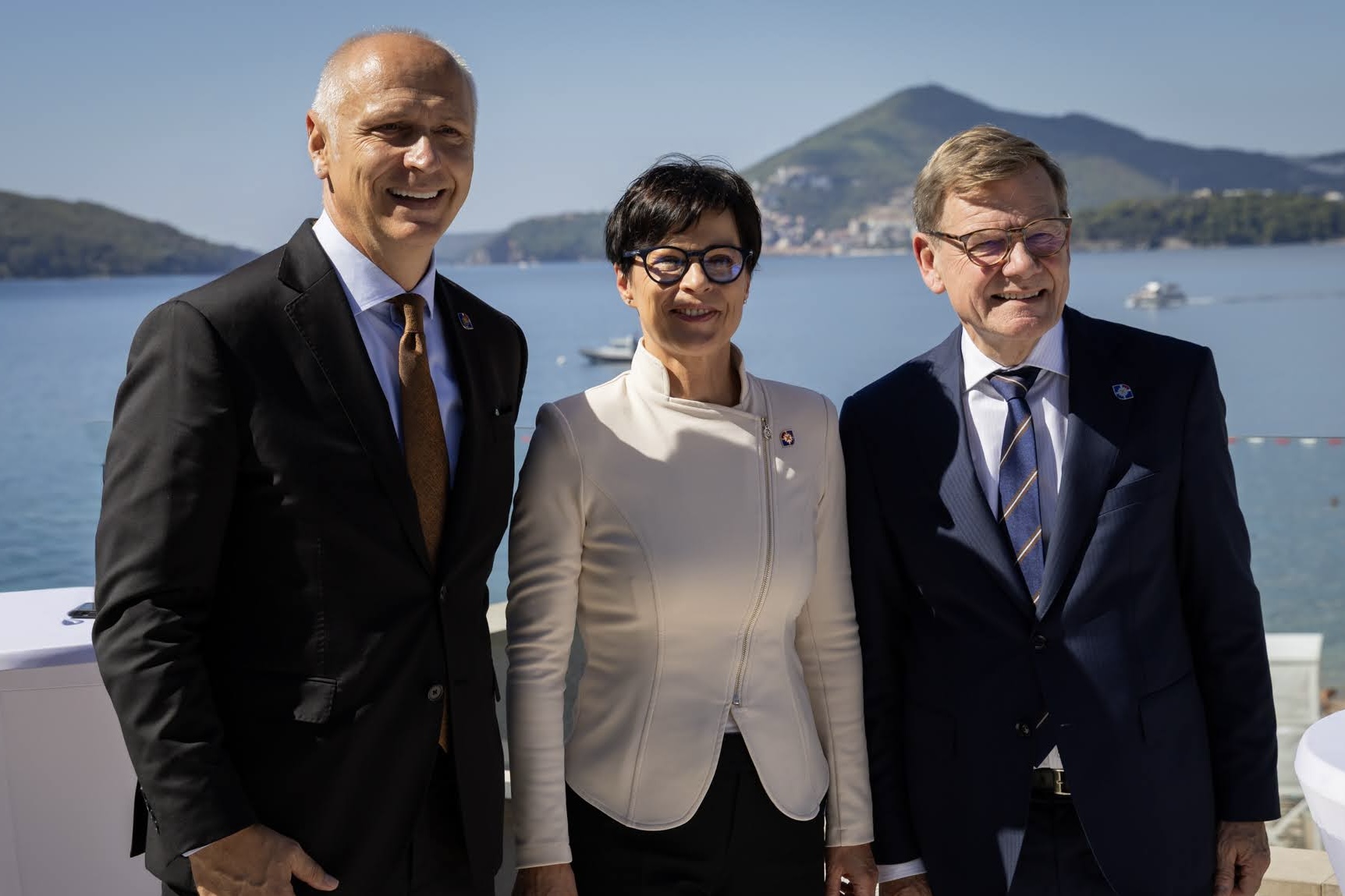
RCC Secretary General Amer Kapetanovic with European Commissioner for Enlargement Marta Kos and Federal Minister for Foreign Affairs of Germany Johann Wadephul at the Berlin Process Meeting of Ministers of Foreign Affairs, held in Pržno on 1 October 2026 (Photo: RCC/Danio Papic)
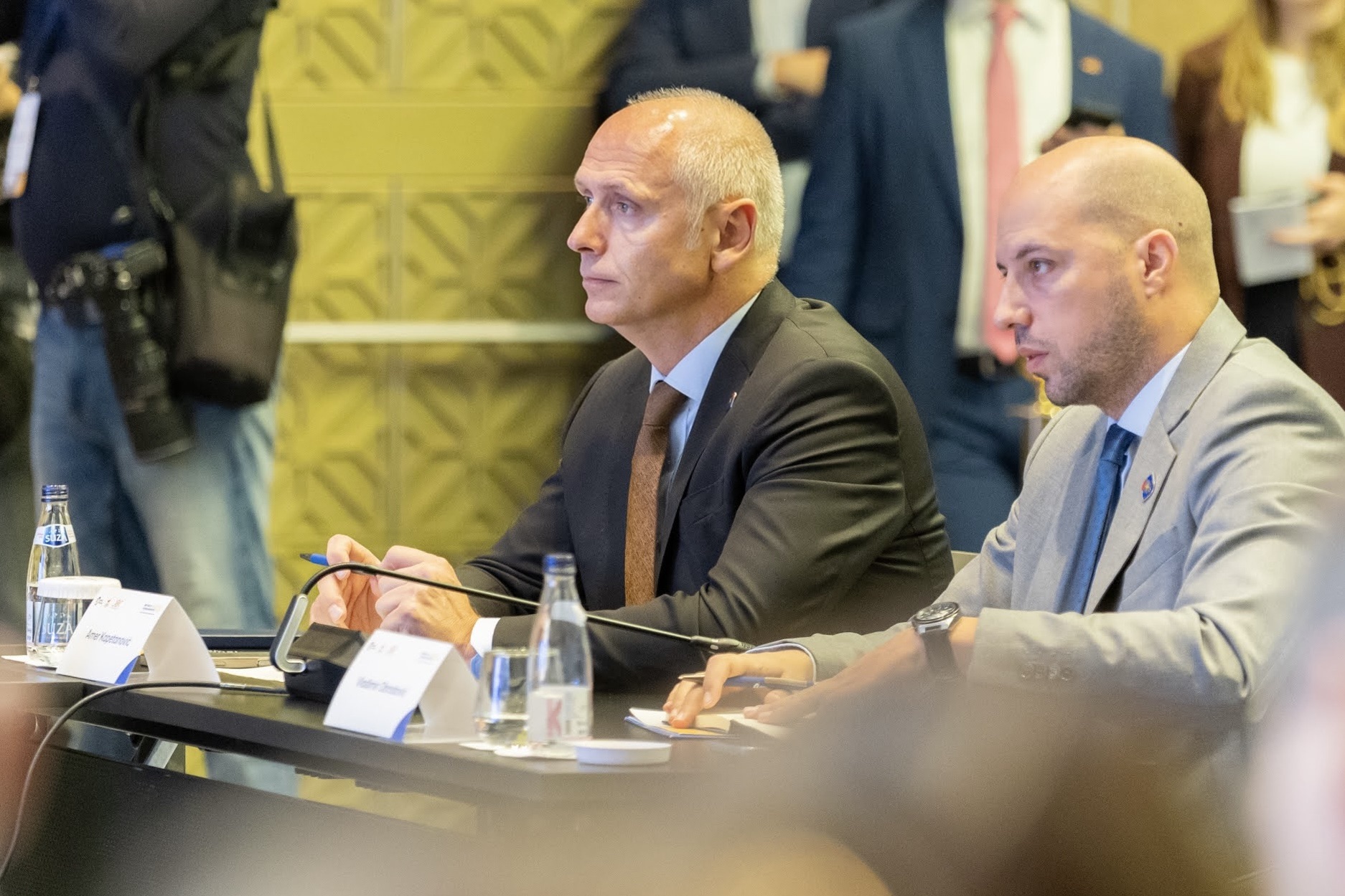
RCC Secretary General Amer Kapetanović took part today in the Berlin Process Meeting of Ministers of Foreign Affairs, held in Pržno on 1 October 2026 (Photo: RCC/Danilo Papic)
RCC Secretary General calls for stronger regional cooperation on security, faster economic convergence and opportunities for the next generation
Pržno - Secretary General of the Regional Cooperation Council (RCC), Amer Kapetanović, took part today in the Berlin Process Meeting of Ministers of Foreign Affairs, held in Pržno under Montenegro’s 2026 Presidency of the Berlin Process.
The meeting focused on the place of the Western Balkans in a changing Europe, addressing security, economic and social convergence, and opportunities for the next generation, as well as the role of the region in strengthening Europe’s overall resilience and security architecture. Alongside foreign ministers from the Western Balkans Six, the meeting brought together European Commissioner for Enlargement Marta Kos, Federal Minister for Foreign Affairs of Germany Johann Wadephul, Minister of Foreign and European Affairs of Slovenia Tone Kajzer, Minister of Foreign and European Affairs of Croatia Gordan Grlić Radman, and Federal Minister for European and International Affairs of Austria Beate Meinl-Reisinger.
“Regional cooperation is not a waiting room for European integration, and it is not a substitute for it either. It is the practical means of making this region, and by extension Europe, more resilient, more connected and more secure,” said Kapetanović.
Addressing the plenary session, the RCC Secretary General stressed that security, convergence and the prospects of young people are closely connected. He pointed to the Common Regional Market as an example of how regional cooperation can translate the European perspective into tangible results, from easier movement and lower roaming costs to stronger investment links, digital transformation and closer integration with the EU Single Market. He added that faster convergence is essential for making the enlargement process tangible for citizens, while investment in human capital, qualifications and technology should create more opportunities for young people to build their future in the region.
During the working lunch dedicated to “A Secure Europe: Strengthening the Resilience of the Western Balkans and the EU”, Kapetanović highlighted growing cyber, hybrid and disinformation threats and underlined that they cannot be addressed within one’s boundaries alone. He pointed to RCC’s regional security governance work, which has mapped more than 350 institutional needs against ongoing assistance, and to the Security Governance Hub, which will become fully operational from January 2027, as a mechanism for better connecting regional needs with European and international support.
“A more resilient Western Balkans is not a favour to Europe’s security. It is a direct contribution to it,” said Kapetanović, stressing that the region should be treated as a working part of Europe’s security architecture rather than its periphery.
The Foreign Ministers’ Meeting follows the Berlin Process Economy Ministers’ Meeting, held yesterday in Cetinje, where Kapetanović called for faster implementation of commitments under the Common Regional Market Action Plan 2025–2028, stressing that delivery is now the key test of the Berlin Process’s credibility. The meeting addressed regional measures aimed at improving the investment environment, competitiveness, innovation and the Western Balkans Six integration into European value chains and the EU Single Market.
Also yesterday, facilitated by the RCC, seven industrial parks and business zones from the Western Balkans Six signed Memoranda of Understanding with six partner organisations from the European Union, formally launching the WB6-EU Industrial Parks Partnership, facilitated by the RCC. The Partnership will support business linkages and integration into European value chains, knowledge and expertise exchange, innovation and skills development, and the gradual transition towards Eco-Industrial Parks. It forms part of the regional economic deliverables being prepared for the 2026 Berlin Process Leaders’ Summit.
The series of Berlin Process ministerial meetings and regional deliverables will feed into the Berlin Process Leaders’ Summit on 22 October at Sveti Stefan, marking the culmination of Montenegro’s 2026 Presidency of the Berlin Process.