


From cyberattacks to disinformation: Young leaders put regional resilience to the test in Bucharest
13 November 2026
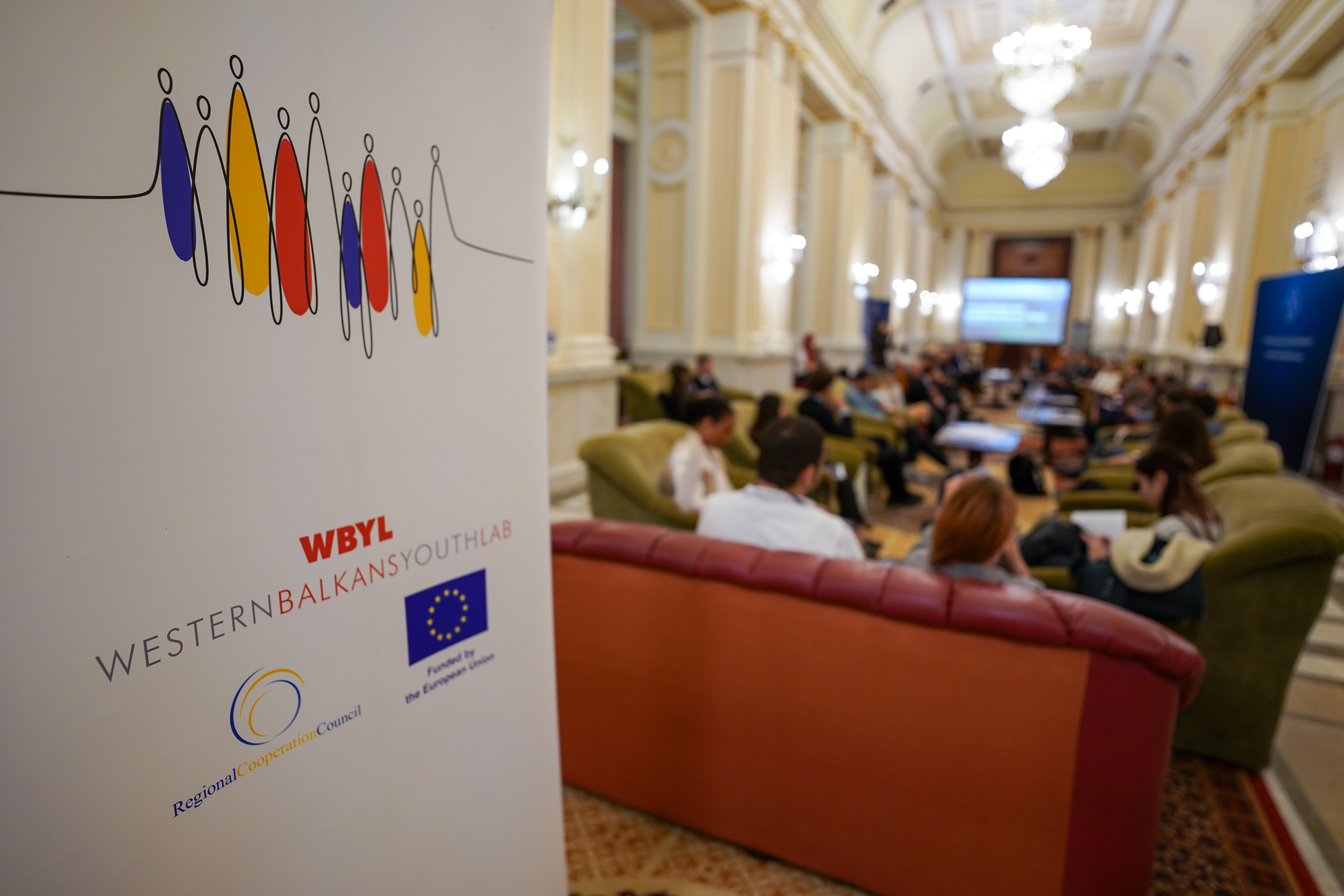
RCC’s WBYL 2 and Euro-Atlantic Resilience Centre brought together young participants for an interactive crisis simulation focused on regional cooperation and responses to emerging security threats, on 13 November 2026 in Bucharest (Photo: EARC)
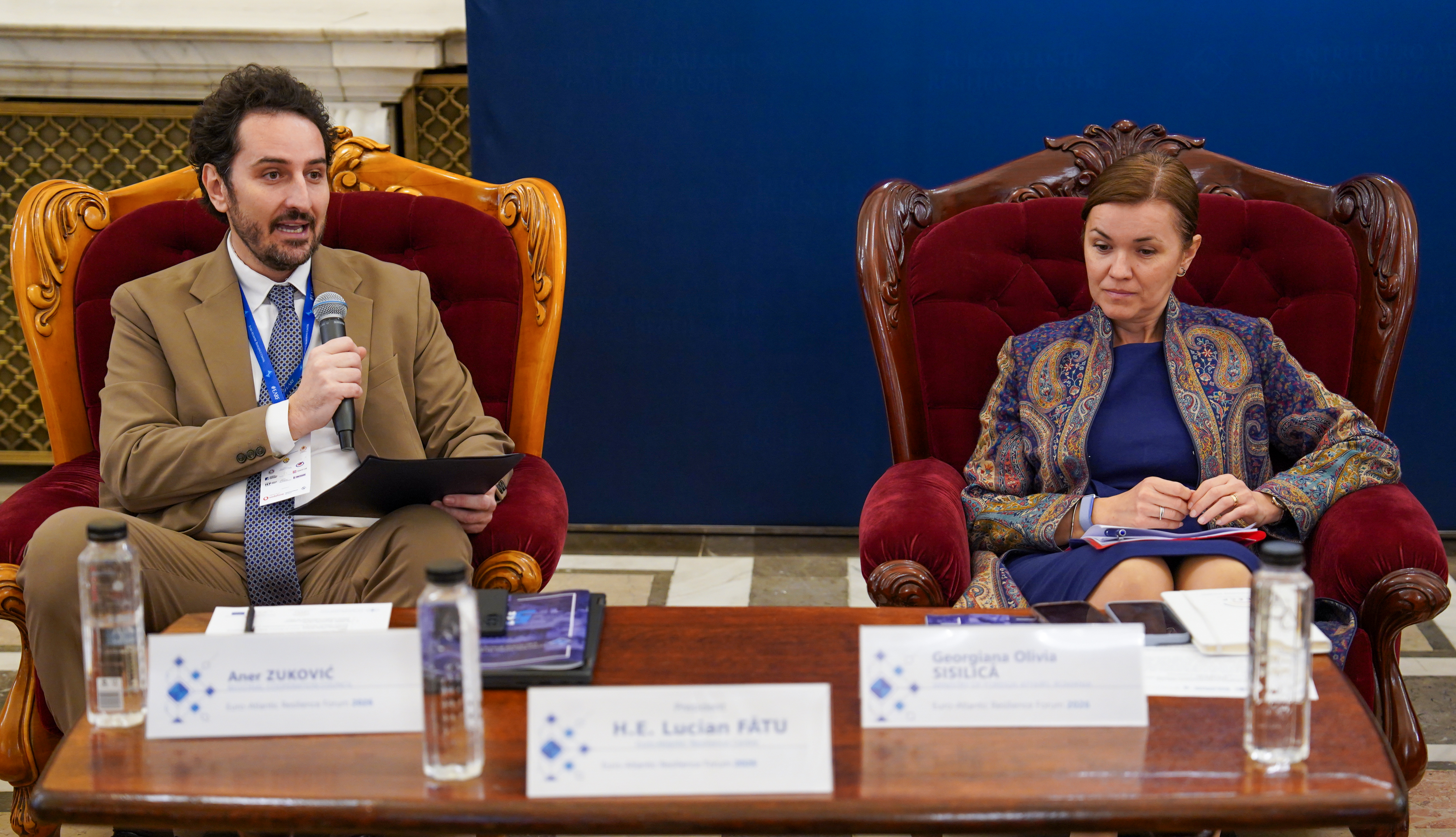
Aner Zuković, Senior Security Advisor at the RCC speaking at the South-Eastern Europe Resilience Challenge 2026 (SEERC 26), an interactive crisis simulation held on 13 November 2026 in Bucharest (Photo: EARC)
RCC’s WBYL 2 and Euro-Atlantic Resilience Centre bring young participants together for an interactive crisis simulation focused on regional cooperation and responses to emerging security threats
Bucharest – Young leaders from the Western Balkans Six and the wider Euro-Atlantic area took part today in the South-Eastern Europe Resilience Challenge 2026 (SEERC 26), an interactive crisis simulation held at the Palace of Parliament in Bucharest as part of the Euro-Atlantic Resilience Forum 2026. Jointly organised by the Regional Cooperation Council (RCC) and the Euro-Atlantic Resilience Centre (E-ARC), the exercise brought together young participants from the Western Balkans through European Union-funded Western Balkans Youth Lab (WBYL), implemented by the RCC, and E-ARC's Future Leaders Fellowship, within the framework of Romania's Chairmanship-in-Office of the South-East European Cooperation Process (SEECP).
“Today's security challenges rarely come one at a time. A cyberattack can disrupt essential services, disinformation can undermine public trust, and what starts as a local incident can quickly become a regional problem. That is why resilience is not just about technology or institutions. It is about people, trust and the ability to work together. By putting young people in the position of decision-makers, we are giving them an opportunity to experience the complexity of crisis management and understand why regional cooperation matters,” said Aner Zuković, Senior Security Advisor at the RCC.
The exercise placed participants in a fictional regional crisis involving cyberattacks, disruptions to critical infrastructure and the rapid spread of disinformation. Working in mixed teams, young participants assumed the roles of crisis coordinators, cybersecurity advisers, fact-checkers, media representatives and strategic communicators. Faced with incomplete and sometimes misleading information, they had to assess risks, verify facts, make decisions under pressure and coordinate responses with neighbouring partners.
As the simulated crisis escalated, participants were challenged to balance the need for rapid action with accurate information, counter disinformation without amplifying it, and consider the wider regional consequences of their decisions. The exercise highlighted how interconnected security threats can test not only institutional preparedness but also public trust, effective communication and the willingness to cooperate beyond individual jurisdictions.
The event opened with WBYL 2 Regional Fireside Talk with High Level Officials on resilience challenges facing South-East Europe and the Euro-Atlantic area, moderated by Aner Zuković. The discussion featured Cristian Emilian Ghiță, Director of the Research, Analysis and Training Department at E-ARC; Georgiana-Olivia Sisilică, Head of the Western Balkans and Regional Cooperation Directorate; and Ritvana Hajdari, Young European Ambassador from Tirana.
The discussion set the stage for the simulation, exploring the growing complexity of security challenges, the importance of preparedness, and the role of young people in strengthening resilience across the region.
By connecting the Western Balkans Youth Lab with the Future Leaders Fellowship, the exercise offered young participants an opportunity to move beyond discussing security challenges to actively developing responses. It also demonstrated the value of critical thinking, media literacy and regional cooperation in building societies better equipped to withstand crises.
***
The Western Balkans Youth Lab 2 project is funded by the European Union and implemented by the Regional Cooperation Council