


RCC Board endorses progress on regional cooperation, adopts Secretary General’s Regular Report
05 November 2026
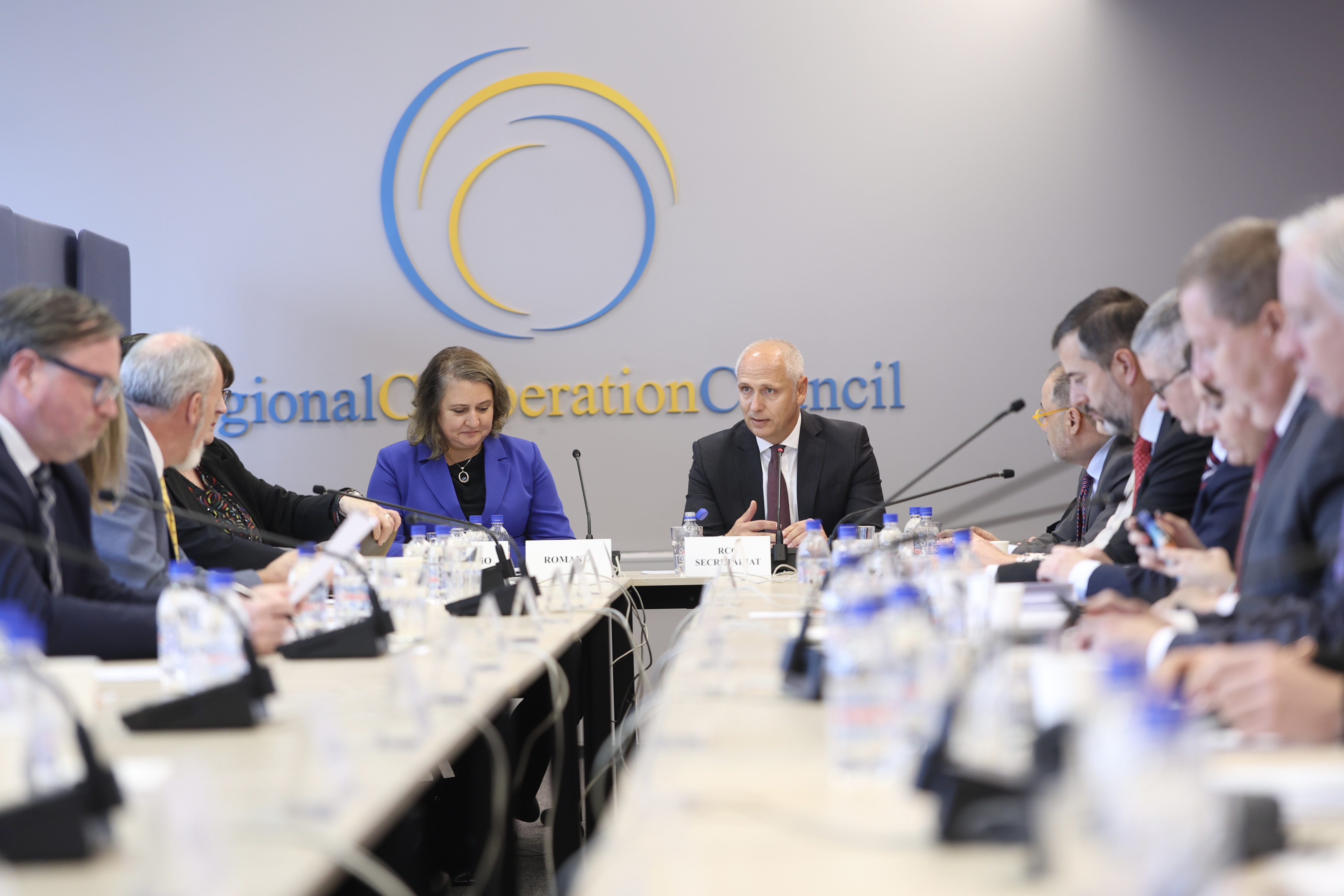
The Board of the Regional Cooperation Council (RCC) held its 60th meeting on 4 November 2026 in Sarajevo (Photo: RCC/Jasmin Sakovic)
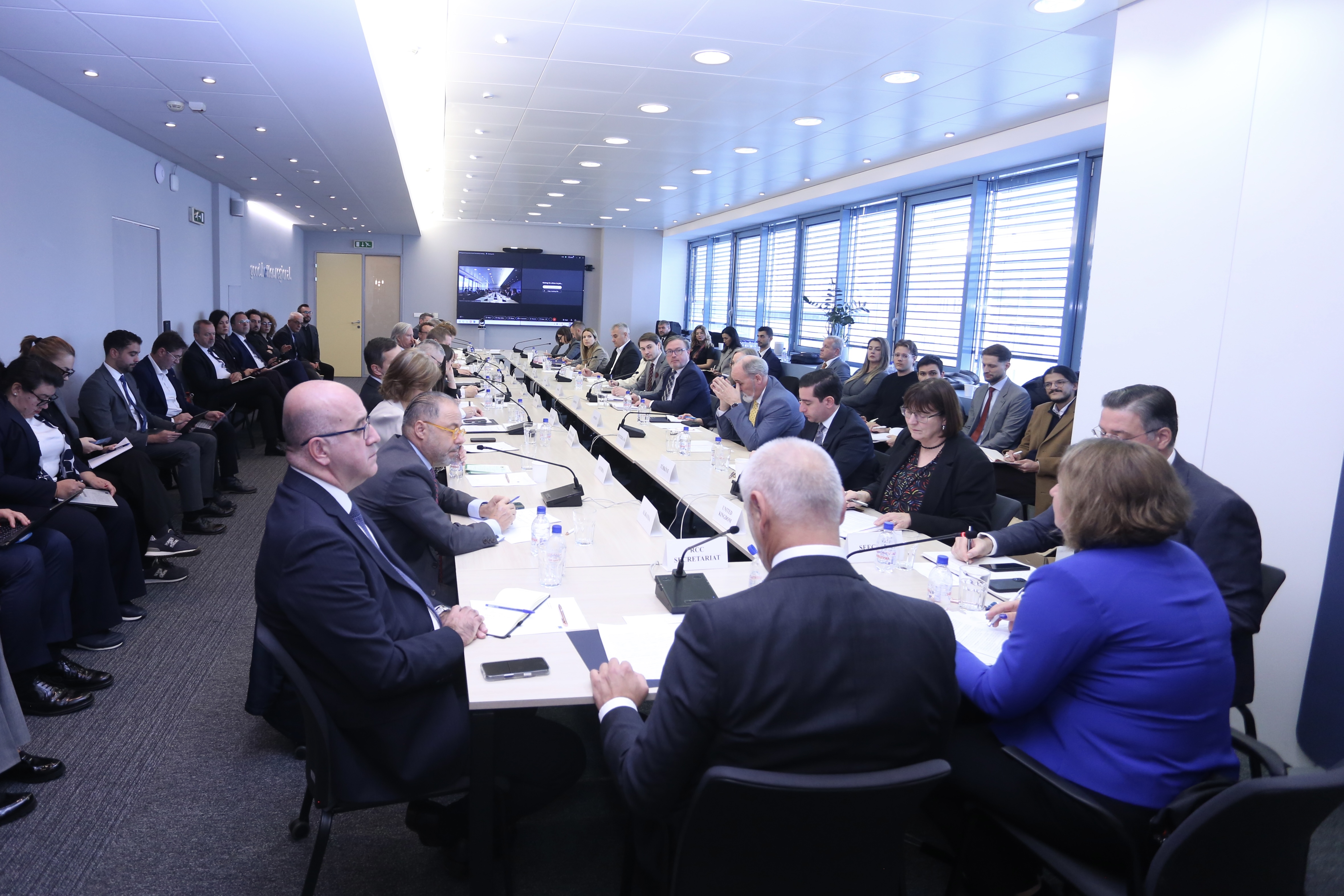
60th RCC Board Meeting took place on 4 November 2026 in Sarajevo (Photo: RCC/Jasmin Sakovic)
60th RCC Board meeting reviews Berlin Process outcomes, Green Agenda implementation, development of regional disaster financial risk sharing mechanism, and SEE2030 Strategy
Sarajevo – The Board of the Regional Cooperation Council (RCC) held its 60th meeting today in Sarajevo, adopting the Regular Report of RCC Secretary General Amer Kapetanović for the period 1 June to 30 October 2026. Board participants welcomed the progress achieved by the RCC across its regional cooperation agenda, particularly its contribution to the 2026 Berlin Process, implementation of the Common Regional Market (CRM) and the Green Agenda for the Western Balkans, and efforts to strengthen regional resilience and security cooperation.
Addressing the Board, RCC Secretary General Amer Kapetanović highlighted the importance of translating regional political agreements into tangible results for citizens and businesses, while maintaining momentum on commitments already undertaken.
“Regional cooperation is measured not by the number of meetings we hold or documents we produce, but by what changes on the ground. The past months have shown that, even in a challenging political environment, we can make progress when there is political will and a shared sense of purpose. The RCC will continue to bring partners together, help bridge differences and turn regional priorities into practical results. Our task now is to build on what has been achieved and ensure that agreed commitments are implemented,” said Kapetanović.
The Board reviewed the RCC’s activities during the reporting period, with particular attention to the outcomes of the Montenegro-chaired 2026 Berlin Process. These included progress on regional economic integration, digital transformation, innovation, investment facilitation and mobility, as well as the launch of the Western Balkans Six-EU Industrial Parks Partnership, connecting seven industrial parks and business zones from the region with six counterparts from the European Union.
Particular attention was given to the Green Agenda for the Western Balkans, following the endorsement of the Žabljak Declaration and accompanying regional deliverables at the Berlin Process Leaders’ Summit in October. The Board was briefed on the next steps in implementing regional climate adaptation, biodiversity protection, forest restoration and circular economy measures, with a focus on translating the agreed frameworks into practical action and investment.
Board participants also received an update on the RCC-coordinated initiative on disaster financial risk sharing in South East Europe. Discussions covered progress towards a feasibility study for regional disaster risk insurance solutions, cooperation with European and international financial institutions, and efforts to improve the availability of data on disaster risks and insurance protection gaps across the region.
The meeting also provided an opportunity to review the RCC’s broader work under the South East Europe 2030 Strategy, including initiatives on sustainable development, regional connectivity and security cooperation. Participants acknowledged the RCC’s continued contribution to advancing shared regional priorities, facilitating dialogue and supporting the implementation of agreed policies and initiatives.
The Board welcomed the RCC’s achievements during the reporting period and expressed appreciation for the Secretariat’s continued work in maintaining regional cooperation, delivering on commitments and responding to emerging regional challenges. Participants also recognised the importance of sustained support for the RCC and its coordinating role in the period ahead.
The 60th RCC Board meeting was preceded by a meeting of the South-East European Cooperation Process (SEECP) Troika and the European Commission with the RCC, which discussed ongoing cooperation and priorities under the SEECP framework. A separate briefing on the implementation of the Common Regional Market Action Plan 2025-2028 provided participants with an overview of progress, outstanding challenges and next steps in advancing regional economic integration.
The RCC Board provides strategic guidance and oversight of the organisation’s activities, bringing together RCC participants and partners to review progress and support cooperation across South East Europe.