

RCC Presents Balkan Barometer 2025 in Brussels: Data Show Record-High Support for EU Membership Kapetanović: People in the Western Balkans are not asking for miracles, but results, and reward progress with trust
11 December 2025
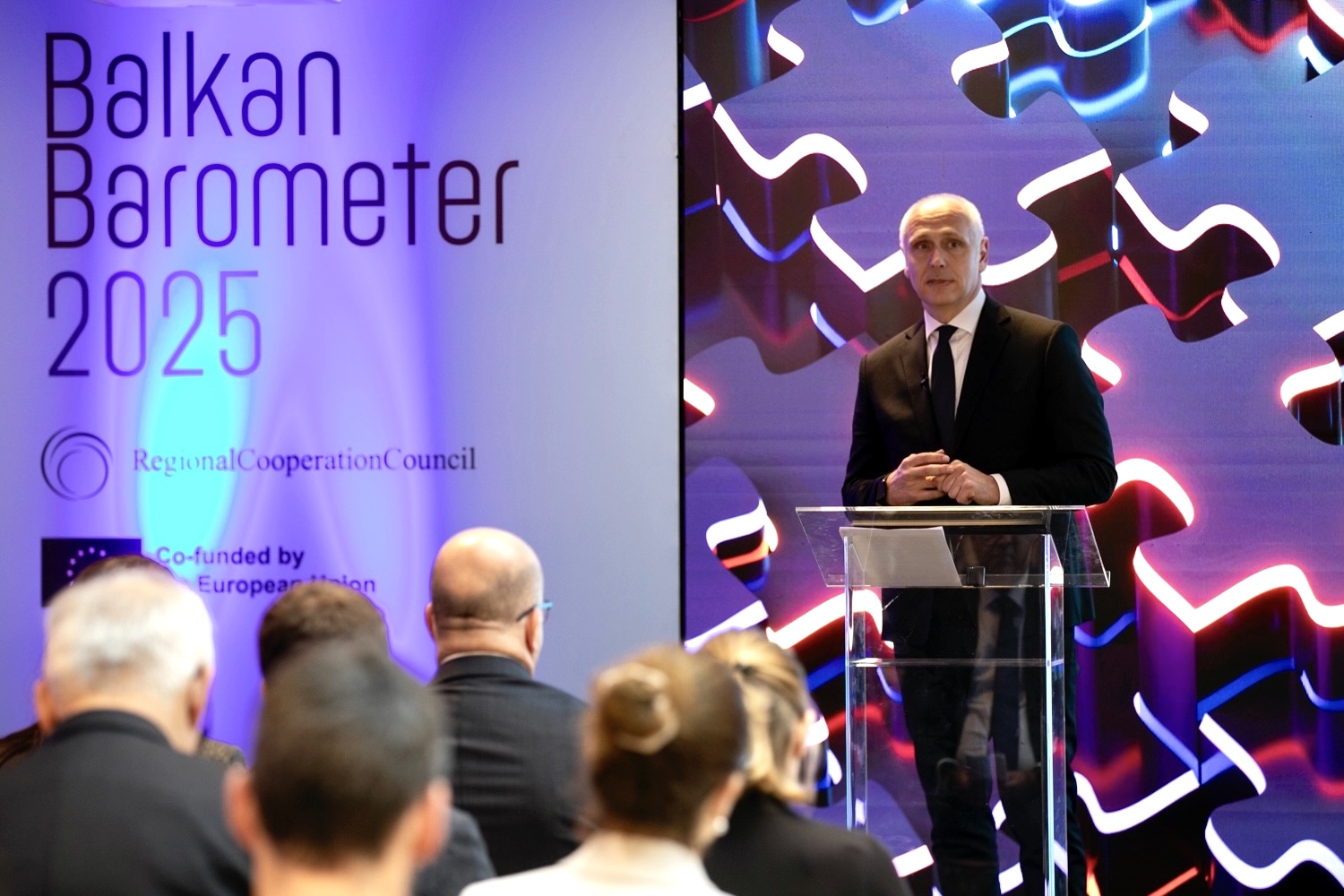
RCC Secretary General Amer Kapetanovic opening the Balkan Barometer 2025 presentation in Brussels on 11 December 2025 (Photo: RCC/Laure Geerts)
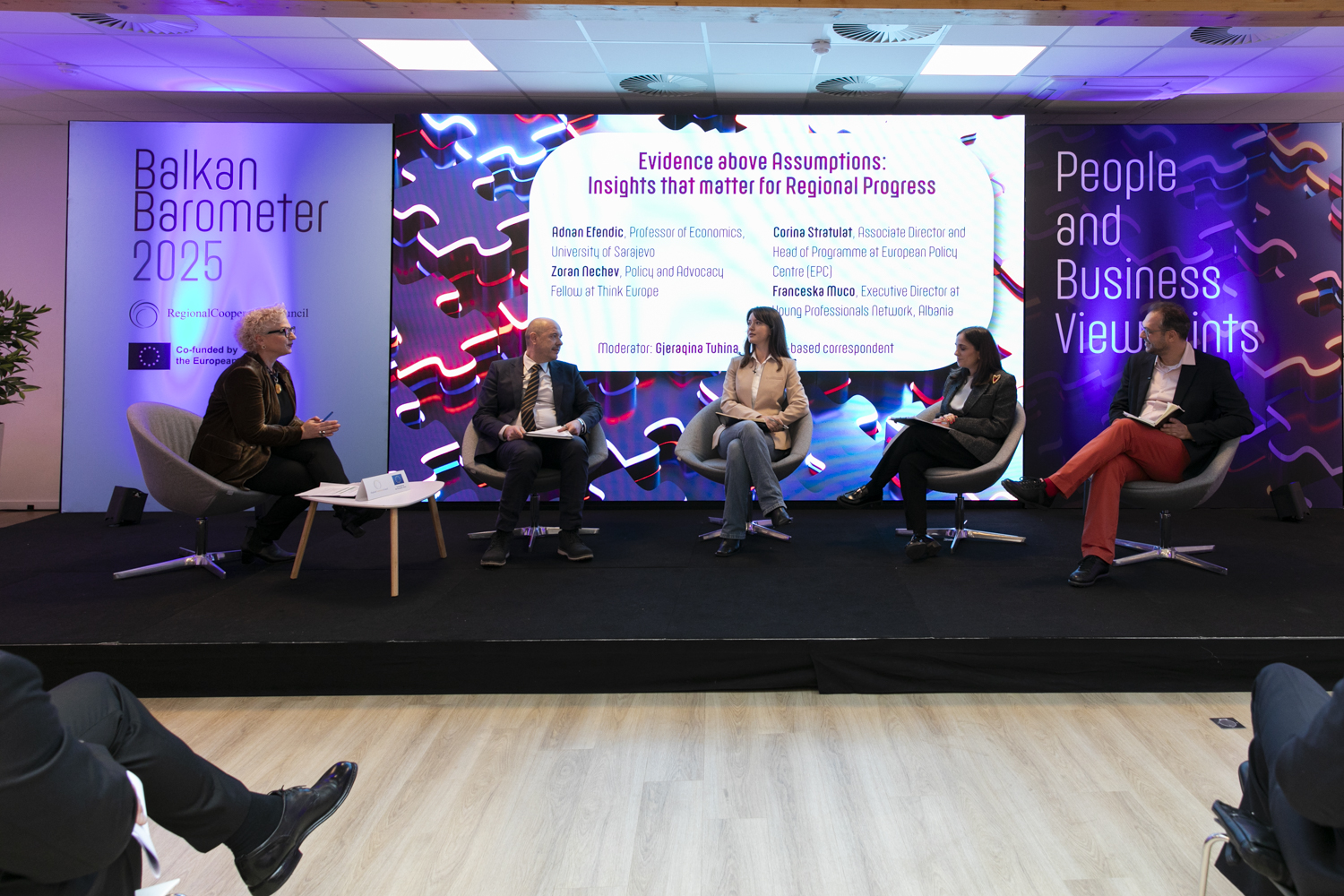
Panel discussion on Balkan Barometer 2025 data presented in Brussels on 11 December 2025 (Photo: RCC/Laure Geerts)
Balkan Barometer is RCC’s annual public and business opinion survey conducted since 2015
Brussels, 11 December 2025 – The Regional Cooperation Council (RCC) presented the Balkan Barometer 2025 today in Brussels, unveiling the most comprehensive regional overview of public and business perceptions across the Western Balkans. This year’s findings show a significant increase in optimism regarding EU integration, strong support for regional cooperation, and clear expectations for economic progress.
“This year, citizens of the Western Balkans are sending a clear message: when real progress happens, trust follows. Support for EU integration is at a record high, and confidence in regional cooperation remains steadily strong. People recognise the value of practical results, from fewer barriers and lower costs to better connectivity and new opportunities for young people and businesses. Our responsibility is to safeguard this momentum and translate it into concrete reforms and tangible benefits for everyone in the region,” said Amer Kapetanović, RCC Secretary General.
According to the results, on average 64% of Western Balkan citizens support EU membership, the highest level recorded since 2015 and an increase of 10% compared to last year. Rising prices and inflation remain the top concern for 66% of citizens; however, as we find out from a new question this year, 64% of citizens are confident that regional cooperation can improve the economic situation. Businesses also report concrete benefits of deeper regional integration, including reduced operational costs stemming from the roaming-free regime and anticipated gains from travel within the region using only an ID card. Youth perspectives show both concern and promise: while 68% of young people are considering working or living abroad (half of them temporary and the other half permanently), 71% believe EU membership would be good for their economy, the highest trust level among youth in the past five years.
“Let me note that this conversation could not come at a better moment. Next week, leaders from the EU and the Western Balkans will gather here in Brussels. The timing is not symbolic, it is strategic. The findings of the Balkan Barometer could serve as a compass for that summit. A reminder that citizens are watching. That EU-hopefulness is rising again. And that trust, once restored, must be protected. For the Western Balkans, this summit is a chance to show that the European path is not theoretical, or seasonal, but credible. And credibility, as the Balkan Barometer shows, changes perspectives. When we look at the full picture, citizens, businesses, institutions, youth, a simple truth emerges. People in the Western Balkans are not asking for miracles. They are asking for results. They reward progress with trust. They believe in Europe when Europe believes in them,” concluded Kapetanović.
The Balkan Barometer 2025 presentation included a panel discussion titled “Evidence above Assumptions: Insights that Matter for Regional Progress”, featuring: Adnan Efendić, Professor of Economics at the University of Sarajevo; Corina Stratulat, Associate Director and Head of Programme at the European Policy Centre (EPC); Zoran Nechev, Policy and Advocacy Fellow at Think Europe; and Franceska Muco, Executive Director of the Young Professionals Network of Albania; with Gjeraqina Tuhina, Brussels-based correspondent, as moderator. The panel explored how data from the Barometer can inform policy-making, strengthen regional cooperation, and support the Western Balkans’ path towards EU membership.
Speech by RCC Secretary General
More info: rcc.int/balkanbarometer