


In the Western Balkans Six, Women Employed Close to 20% Less than Men While Pay Gaps Persist
08 March 2026
International Women's Day highlights the need to accelerated reforms enabling women to fully benefit the region's labour markets
International Women's Day highlights the need to accelerated reforms enabling women to fully benefit the region's labour markets
Sarajevo - On the occasion of International Women's Day, the Regional Cooperation Council (RCC) is drawing attention to the persistent gender employment and pay gaps in labour market across the Western Balkans Six (WB6), emphasising a need for stronger and more coordinated efforts to turn gender equality commitments into tangible results.
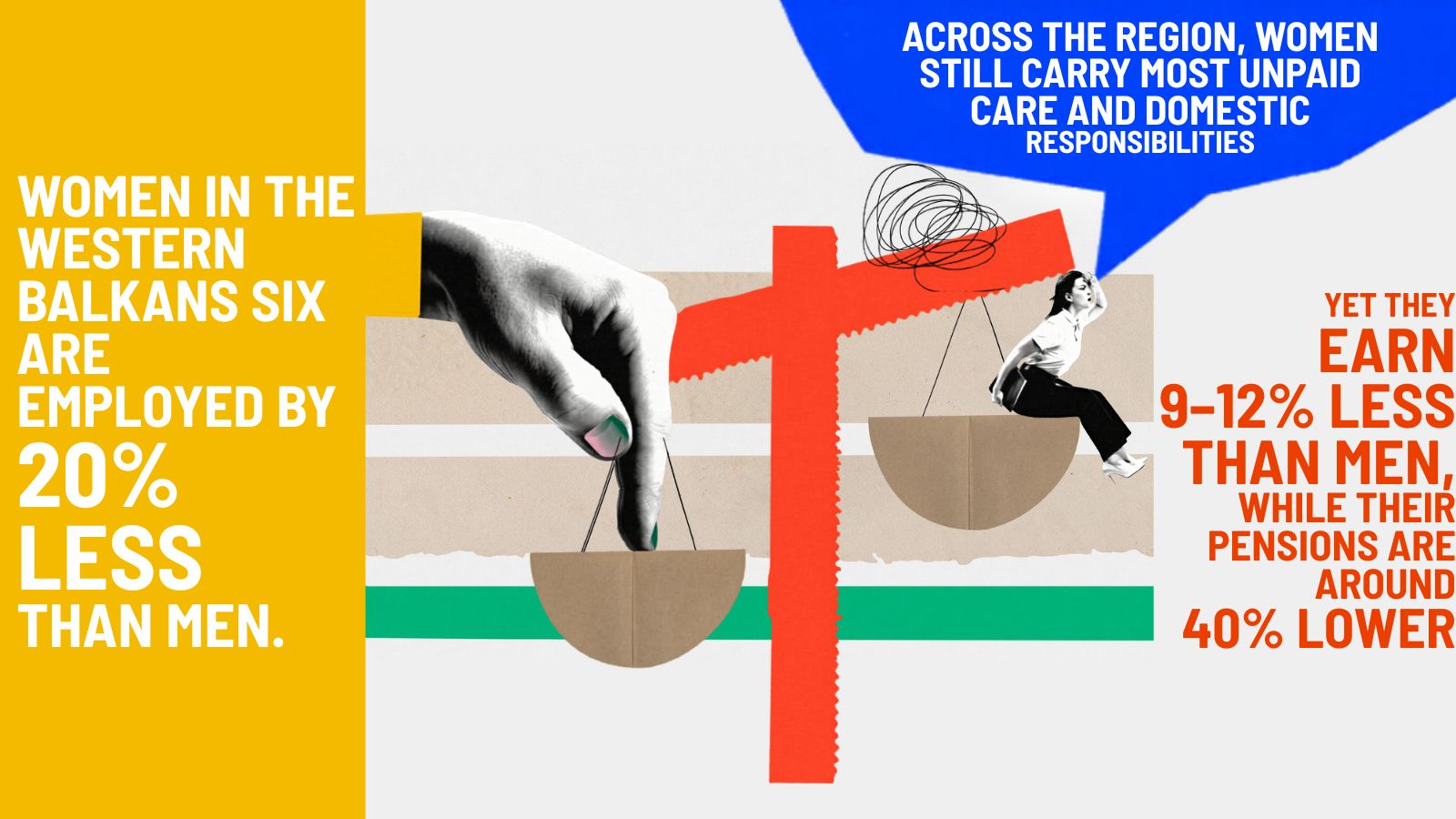
Data indicate that only 51% of women in the WB6 on average are employed, compared to 70% of men, representing a gap of close to 20 percentage points, nearly double the average gap in the European Union. Women’s activity rate stands at just under 55%, considerably below the EU average of around 70%. While progress has been made in recent years, women in the region continue to face significant barriers when it comes to entering, remaining in and advancing in the labour market.
"Across the Western Balkans Six, women are highly educated and increasingly ambitious in shaping their professional futures. Yet structural barriers still prevent many from translating their potential into equal participation in the labour market," said Ratka Babić, Leader of the RCC Employment and Social Affairs Platform 3 (ESAP 3) project. "Closing the gender employment gap requires not only strong legal frameworks, but practical measures: from accessible childcare and care services to active labour market policies and stronger opportunities for reskilling and lifelong learning. Investing in women's economic participation is not only a matter of fairness, but a driver of stronger and more resilient economies across the region, " added Babić.
Young women face particularly difficult prospects. In WB6, on average only 18% of young women are employed, while 28% are unemployed, almost twice the EU average. Women are also more likely to work in low-paid, informal or part-time jobs, and remain underrepresented in STEM fields and leadership positions.
Pay disparities and long-term financial insecurity further compound these challenges. The gender pay gap in the region is estimated at between 9 and 12%, although it is often obscured by high levels of informal employment and limited pay transparency. According to a joint United Nations Development Programme and RCC analysis, women's pensions in the region are around 40% lower than those of men, reflecting years of lower wages, career interruptions and informal work.
Women continue to shoulder the majority of unpaid care and domestic responsibilities. Limited access to affordable childcare and long-term care services remain a key obstacle to full-time employment.
At the same time, women outperform men in tertiary education attainment, with around 40% of women completing higher education. However, participation in adult learning programmes remains low, at around 5%, compared to nearly 12% in the EU, limiting opportunities for reskilling and career progression.
Through initiatives such as the ESAP 3, the RCC continues to support WB6 in strengthening labour market policies and promoting more inclusive labour markets.
International Women's Day serves as a reminder that gender equality cannot remain only a policy objective. Continued reforms, adequate funding and sustained regional cooperation are essential to ensure that women across the WB6 can fully participate in, and benefit from, the region's economic development.