


Integrative Internal Security Governance Board welcomes future integration of IISG into RCC security portfolio
25 May 2026
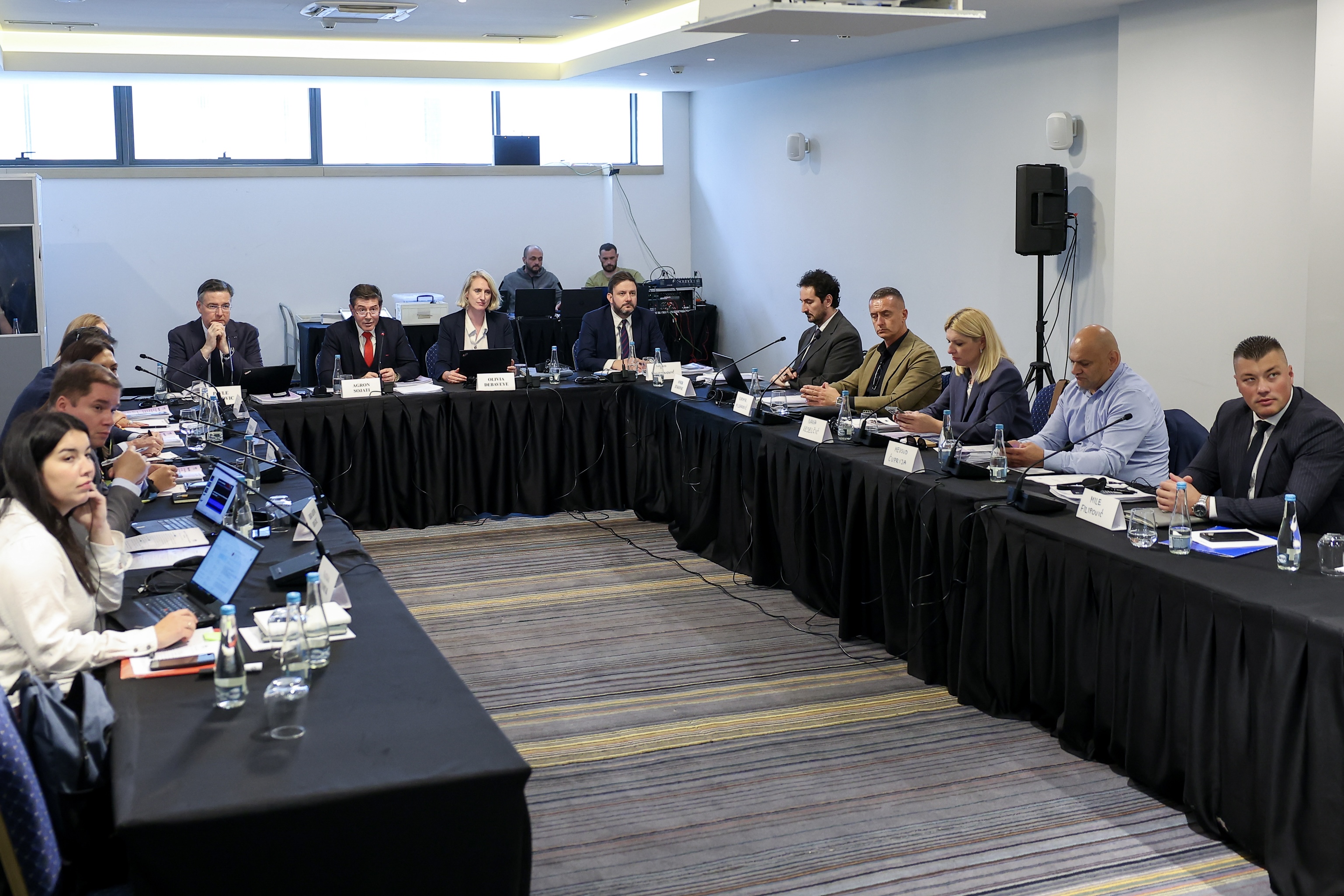
The 8th Board Meeting of the Integrative Internal Security Governance Initiative (IISG) in Sarajevo on 19 May 2026 (Photo: RCC/Armin Durgut)
The 8th Board Meeting of the Integrative Internal Security Governance Initiative (IISG), held in Sarajevo on 19 May 2026, marked an important milestone for regional security cooperation in the Western Balkans Six, as the Board members took note and welcomed the future integration of IISG into RCC security portfolio. The meeting was co-chaired by Pavle Janković, Head of Political Department at the RCC and Olivia Debaveye, Team leader on Rule of Law, Security & Migration, and Reconciliation at European Commission. It brought together representatives of the Western Balkans Six partners, the European Commission and the RCC to discuss key strategic developments within the IISG framework and the next steps in strengthening regional internal security governance.
The transition towards the Security Governance Hub will reflect a gradual move from project-based coordination towards a sustainable regional platform for governance coordination, analytical support, implementation monitoring and donor harmonisation. Anchored within the RCC framework, the future Hub is expected to provide political continuity, institutional sustainability and stronger links with broader regional cooperation mechanisms, while preserving the operational expertise and regional ownership built through the IISG process.
“The RCC’s stronger governance role within the IISG framework represents an important institutional milestone for regional security cooperation. The transition towards the future Security Governance Hub demonstrates our shared commitment to move from fragmented coordination towards a more structured, sustainable and regionally owned model. This means stronger analytical support, better implementation monitoring, more effective donor coordination and a clearer link between regional security priorities and broader regional cooperation mechanisms. Sustainable regional security can only succeed when regional ownership, domestic responsibility and donor coordination work together in a complementary manner,” said Pavle Janković, Head of Political Department at the RCC.
The meeting also concluded the needs mapping process across all IISG pillars, making information available to donors and implementers to support future project planning and better align assistance with regional priorities.
“The conclusion of the needs mapping process gives the region and its partners a clearer picture of where support is most needed. This is essential for turning shared security priorities into concrete, coordinated and measurable action,” said Agron Sojati, Head of the IISG Secretariat.
The Board also took note of key operational priorities and follow-up activities planned under the IISG/Security Governance Hub Annual Activity Planning for 2026, and approved the Annual Activity Report, Annual Activity Plan, and Response Needs Mapping Regional Reports for the pillars.