

Kapetanović: Creative industries are not decoration; they are competitiveness
18 June 2026
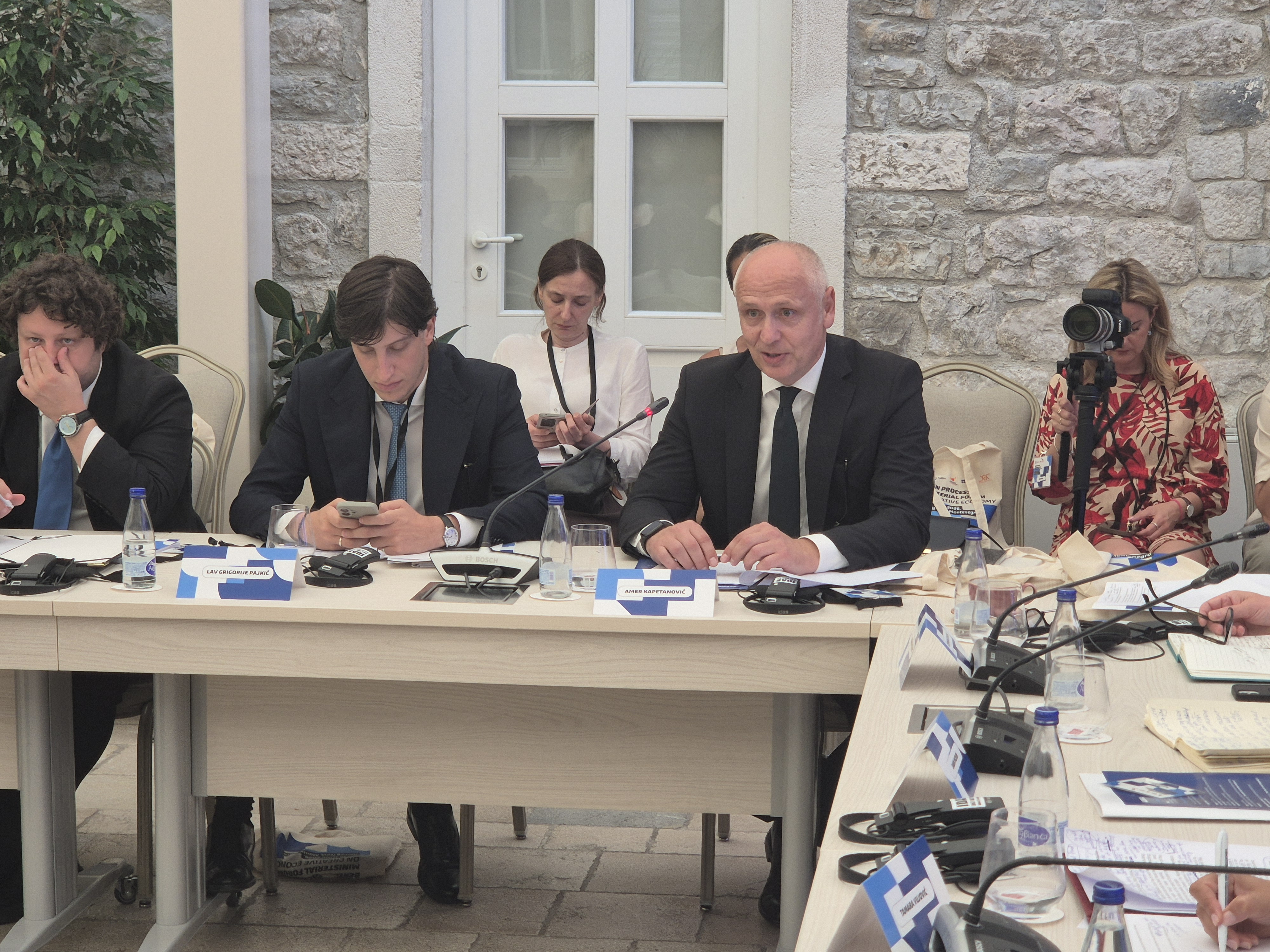
RCC Secretary General Amer Kapetanovic at the Berlin Process Ministerial Forum on the Creative Economy held in Herceg Novi on 18 June 2026 (Photo: RCC)
Herceg Novi – The Berlin Process Ministerial Forum on the Creative Economy, hosted by Montenegro as this year’s Chair of the Berlin Process, opened today in Herceg Novi, bringing together ministers responsible for culture and representatives from the Western Balkans and the rest of Europe to discuss the role of creative industries in sustainable development, youth employment and regional competitiveness. The Forum continues the dialogue launched in 2025 under the United Kingdom’s Chairmanship of the Berlin Process and is organised by Montenegro’s Ministry of Culture and Media in cooperation with the British Council.
“The Western Balkans cannot compete globally on labour costs alone. We have to compete on ideas, authenticity, digital skills, culture, experience and identity. Creative industries are not marginal cultural activities. They create jobs, generate exports, attract visitors, strengthen the region’s image and give young people a reason to stay and build their future here. Creativity is not decoration. Creativity is competitiveness,” said Regional Cooperation Council (RCC) Secretary General Amer Kapetanović during the Forum’s ministerial discussion, chaired by Stephen Stenning, Director of Culture in Action at the British Council.
Kapetanović stressed that the region does not lack creative talent, underlining: “We do not lack creativity; we lack an industry system. We do not lack talent; we lack scale. And we do not lack stories; we lack the platforms needed to transform those stories into sustainable economic value. Each Western Balkan economy is small on its own, but together we can build the regional scale that creative businesses need.”
The RCC Secretary General also called for creative industries to be more closely integrated into the Common Regional Market, the EU Growth Plan and the broader regional competitiveness agenda and concluded: “The creative economy simultaneously encompasses services, exports, tourism, innovation, small-business development, skills, youth employment and regional branding. It belongs at the heart of our competitiveness agenda, not on its margins. The industry will provide creativity. Our task is to build the structure, scale and access to markets around it.”
In addition to the RCC SG, contributions to the ministerial discussion were delivered by Tamara Vujović, Minister of Culture and Media; Saranda Bogujevci, Minister of Culture and Tourism; Lav Grigorije Pajkić, State Secretary of Ministry of Culture; and Eleonora Zaprova, Special Adviser for International Cooperation at Ministry of Culture and Tourism.
Prior to the ministerial discussion, the Forum was opened by Montenegro’s Minister of Culture and Media Tamara Vujović and the United Kingdom’s Ambassador to Montenegro Dawn McKen, followed by Marko Gošović, Director General of the Directorate for Creative Industries, Ministry of Culture and Media, Clare Sears Wood, Director for Western Balkans at British Council, and Iain Bennett, founder of Fifth Sector.