

Western Balkans Six endorse the 2026 Green Agenda Ministerial Declaration in Žabljak
18 September 2026
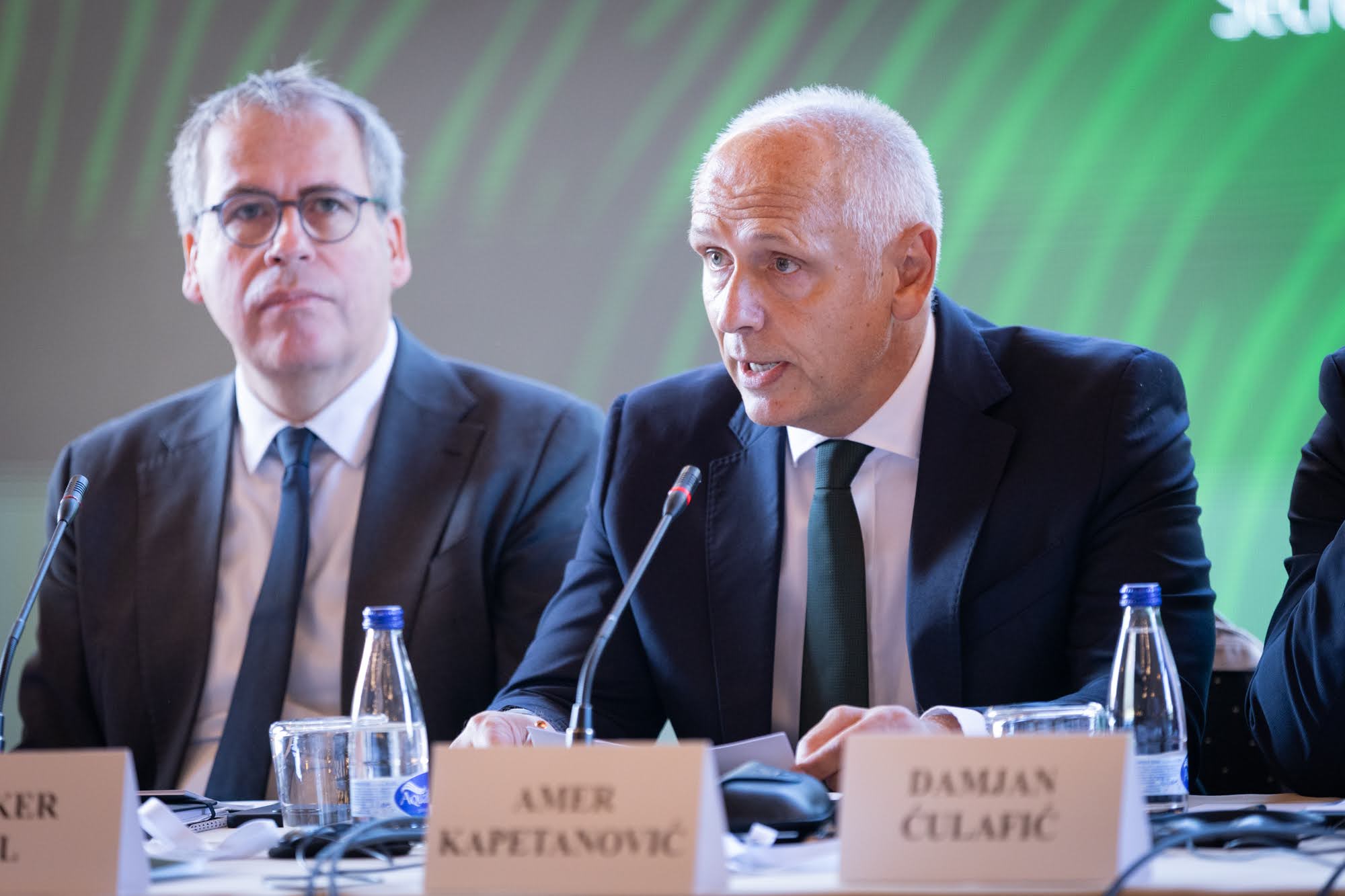
RCC Secretary General Amer Kapetanovic opening the Third Annual Ministerial Meeting on the Green Agenda for the Western Balkans (GAWB) on 18 September 2026 in Zabljak (Photo: RCC/Danilo Papic)
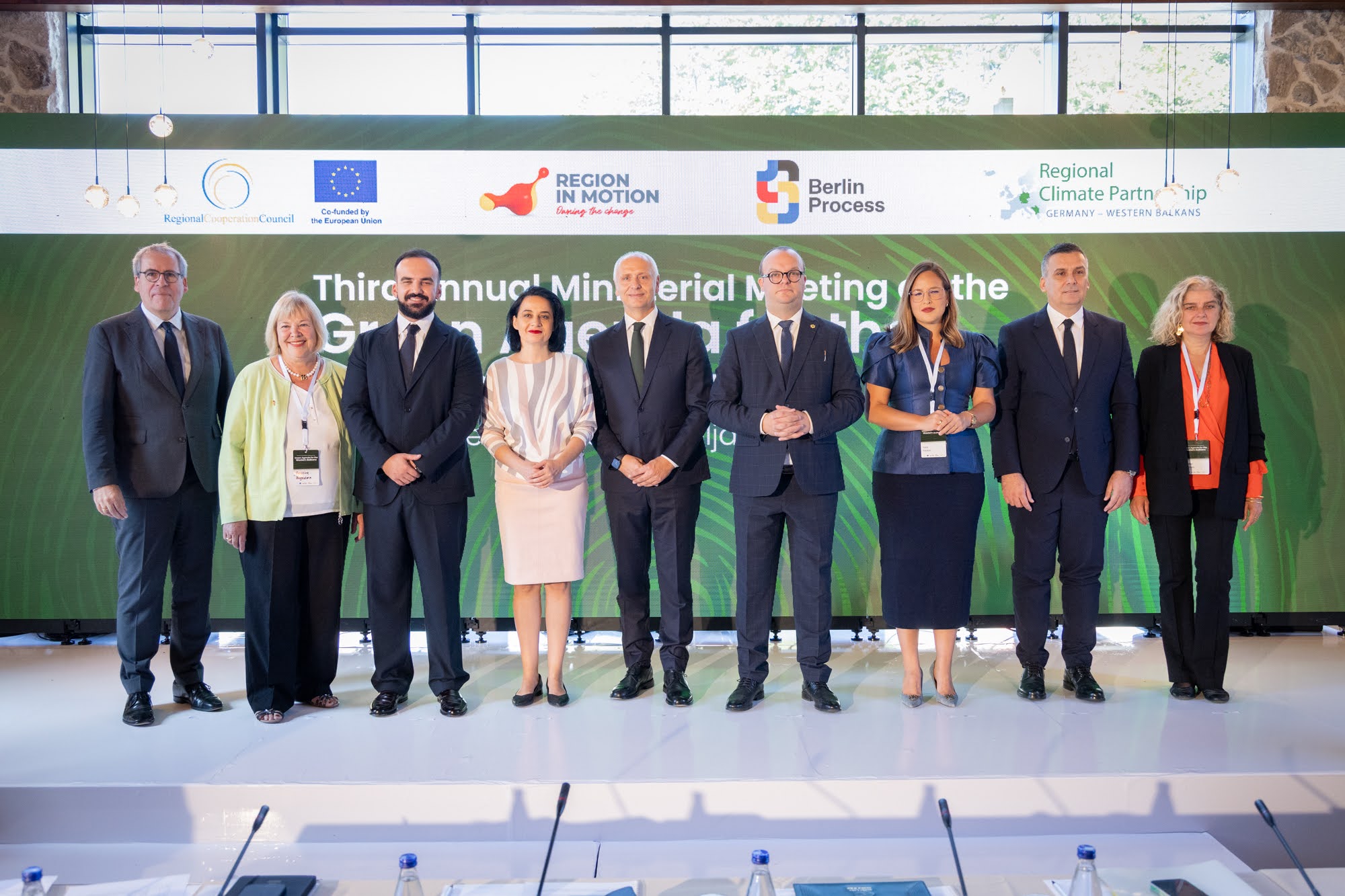
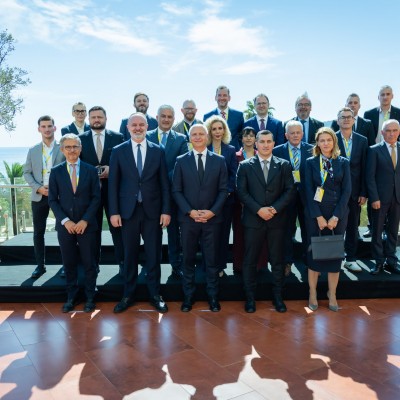
Third Annual Ministerial Meeting on the Green Agenda for the Western Balkans (GAWB) taking place in Zabljak on 18-19 September 2026 (Photo: RCC/Danilo Papic)
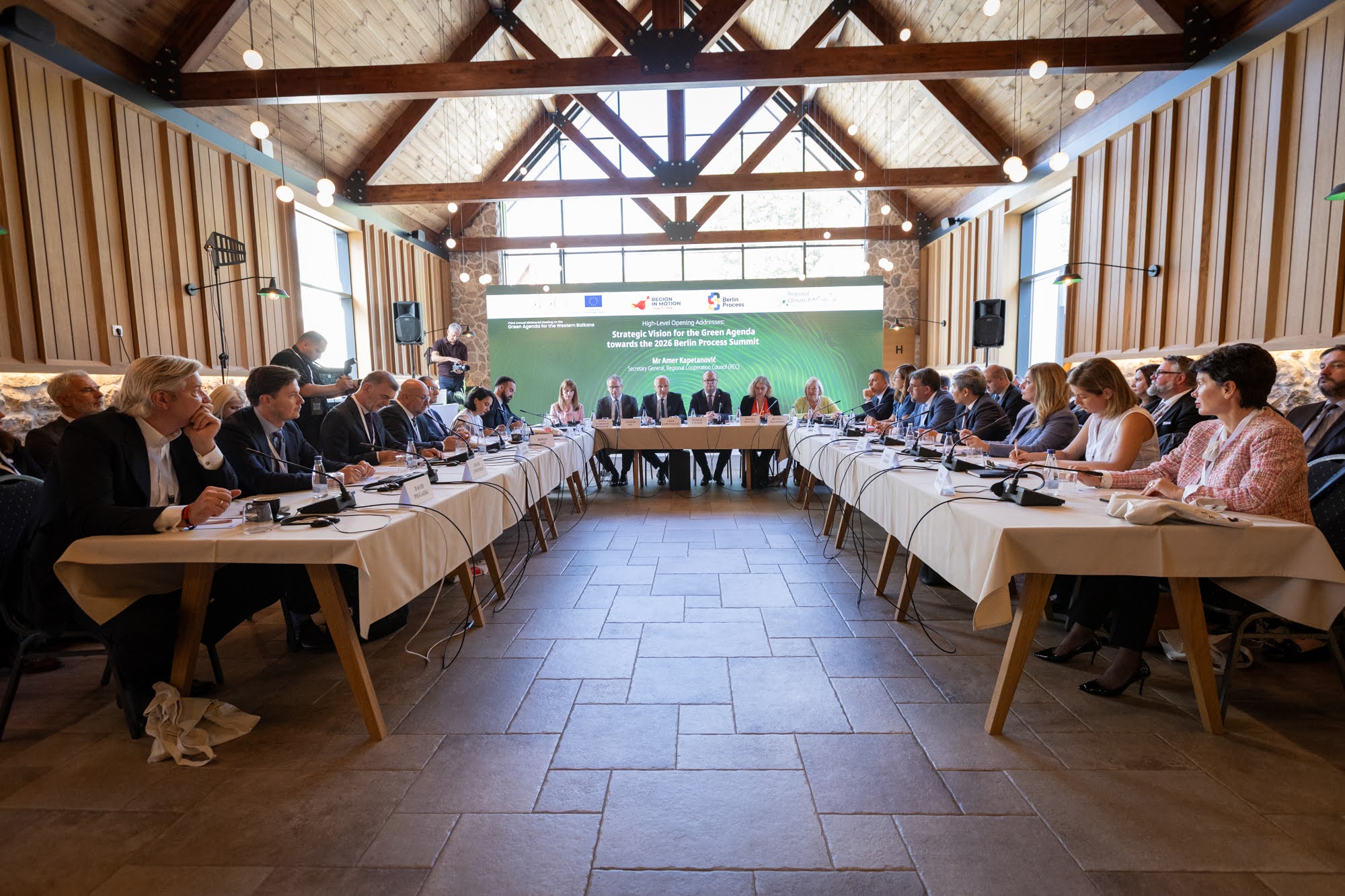
Third Annual Ministerial Meeting on the Green Agenda for the Western Balkans (GAWB) taking place in Zabljak on 18-19 September 2026 (Photo: RCC/Danilo Papic)
New regional commitments on climate adaptation, biodiversity, forest restoration and plastic pollution set direction ahead of Berlin Process Summit
Žabljak – Ministers from the Western Balkans Six endorsed the 2026 Ministerial Declaration on the Green Agenda for the Western Balkans in Žabljak today, at the Third Annual Ministerial Meeting on the Green Agenda for the Western Balkans (GAWB), organised by the Regional Cooperation Council (RCC), in cooperation with the Government of Montenegro, under Montenegro’s Chairmanship of the 2026 Berlin Process, the Federal Ministry for Economic Cooperation and Development of Germany (BMZ), within the framework of the Regional Climate Partnership between Germany and the Western Balkans Six, and with the support of the European Commission.
Minister of Ecology, Sustainable Development and Northern Region Development Damjan Ćulafić highlighted the significance of holding the Ministerial in Žabljak, where Montenegro adopted its landmark ecological declaration 35 years ago, and linked the commitments agreed today with Montenegro’s Chairmanship of the Berlin Process.
“By endorsing the 2026 Ministerial Declaration on the Green Agenda for the Western Balkans today, we have taken an important step towards the next phase of its implementation. This Declaration is not the end of the process, but a political confirmation of our commitment to faster, more measurable and better-coordinated progress across the region. It is particularly important that this meeting is taking place in Žabljak, under Montenegro’s Chairmanship of the 2026 Berlin Process. It is our responsibility to carry the outcomes of today’s meeting forward and translate them into a concrete political contribution to the conclusions of the upcoming Berlin Process Summit. With today’s Declaration, we take into account the findings of GARI 2025 and set the direction for the period ahead. The focus must be on the areas where the region’s needs are most pressing: climate and water resilience, protection of nature and biodiversity, the circular economy, pollution reduction, and securing sustainable financing for the green transition.”
RCC Secretary General Amer Kapetanović warned that the effects of climate change were already imposing a heavy cost on the region and called for the newly agreed commitments to be followed by concrete implementation.
“Last year alone, 225,000 hectares burned across the Western Balkans in more than 430 large wildfires. The cost of the transition arrived before the transition did. That is why we must hurry up and stay open-minded about solutions. We now have concrete regional work on climate adaptation, biodiversity, plastics and forest restoration. But none of it yet has a budget, or a responsible name behind it. Making that happen is the test for our joint work ahead,” said Kapetanović.
Bettina Hagedorn, Parliamentary State Secretary at the Federal Ministry for the Environment, Climate Protection, Nature Conservation and Nuclear Safety, reaffirmed Germany’s support through the Regional Climate Partnership.
“This Third Green Agenda Ministerial meeting demonstrates our WB6 partners’ commitment to regional cooperation and to a shared European future. The declarations and strategies agreed under the Green Agenda and endorsed today provide an essential step forward. Germany supports our WB6 partners in translating shared ambition into coordinated action and practical, transparent and inclusive implementation. Moving swiftly from endorsement to delivery will strengthen resilience, security and competitiveness across the region, because a stronger Western Balkans Six also means a stronger Europe.”
The 2026 GAWB Ministerial Declaration sets the political direction for the next phase of Green Agenda implementation. Together with the Declaration, ministers endorsed a package of regional deliverables addressing some of the region’s most pressing environmental and climate challenges.
These include the WB6 Climate Adaptation Strategy, which establishes structured regional cooperation on adaptation planning, climate risks and water resilience; the WB6 Biodiversity Strategic Plan 2030, aligned with the EU Biodiversity Strategy for 2030 and the Kunming-Montreal Global Biodiversity Framework; and the WB6 Forest Landscape Restoration Plan, setting priority actions for restoring forest ecosystems critical for biodiversity and climate resilience.
Also endorsed were the Regional Pledge on phasing out the five most littered single-use plastics, aimed at supporting harmonised regional action to prevent plastic pollution, and the Regional Extended Producer Responsibility Framework for Plastic Packaging, providing a harmonised regional approach to making producers responsible for the management of packaging waste.
The Ministerial brought together ministers from the Western Balkans Six, representatives of the European Commission and Germany, regional organisations and international partners to review progress in implementing the Green Agenda and discuss priorities for the period ahead. Discussions focused on climate and water resilience, biodiversity and nature protection, circular economy and sustainable finance, as well as stronger regional coordination ahead of the Berlin Process Leaders’ Summit in October, hosted by Montenegro as Chair of the Berlin Process 2026.
The meeting continues tomorrow with practical regional exchanges on plastic pollution and Extended Producer Responsibility, biodiversity and ecosystem restoration, and strengthening monitoring, reporting, verification and accreditation systems and sustainable finance. The sessions will focus on implementation challenges, financing needs, regional cooperation and concrete next steps for putting the newly endorsed commitments into practice.