

Kapetanović: Western Balkans must accelerate regional market integration to deliver on EU Growth Plan
27 November 2026
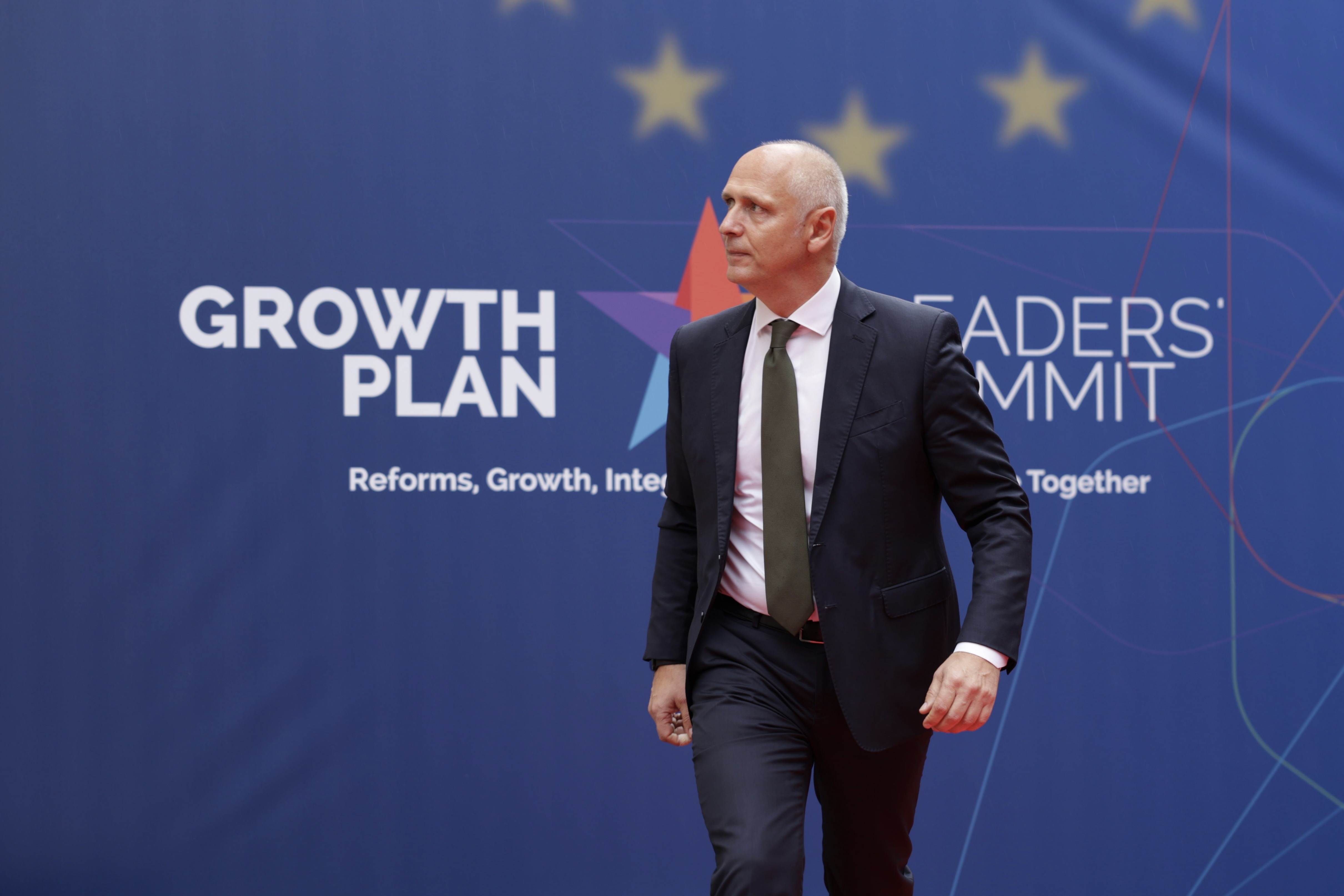
RCC Secretary General Amer Kapetanovic took part in the Growth Plan Leaders' Summit in Tirana on 27 November 2026 (Photo: RCC/Rei Lico)
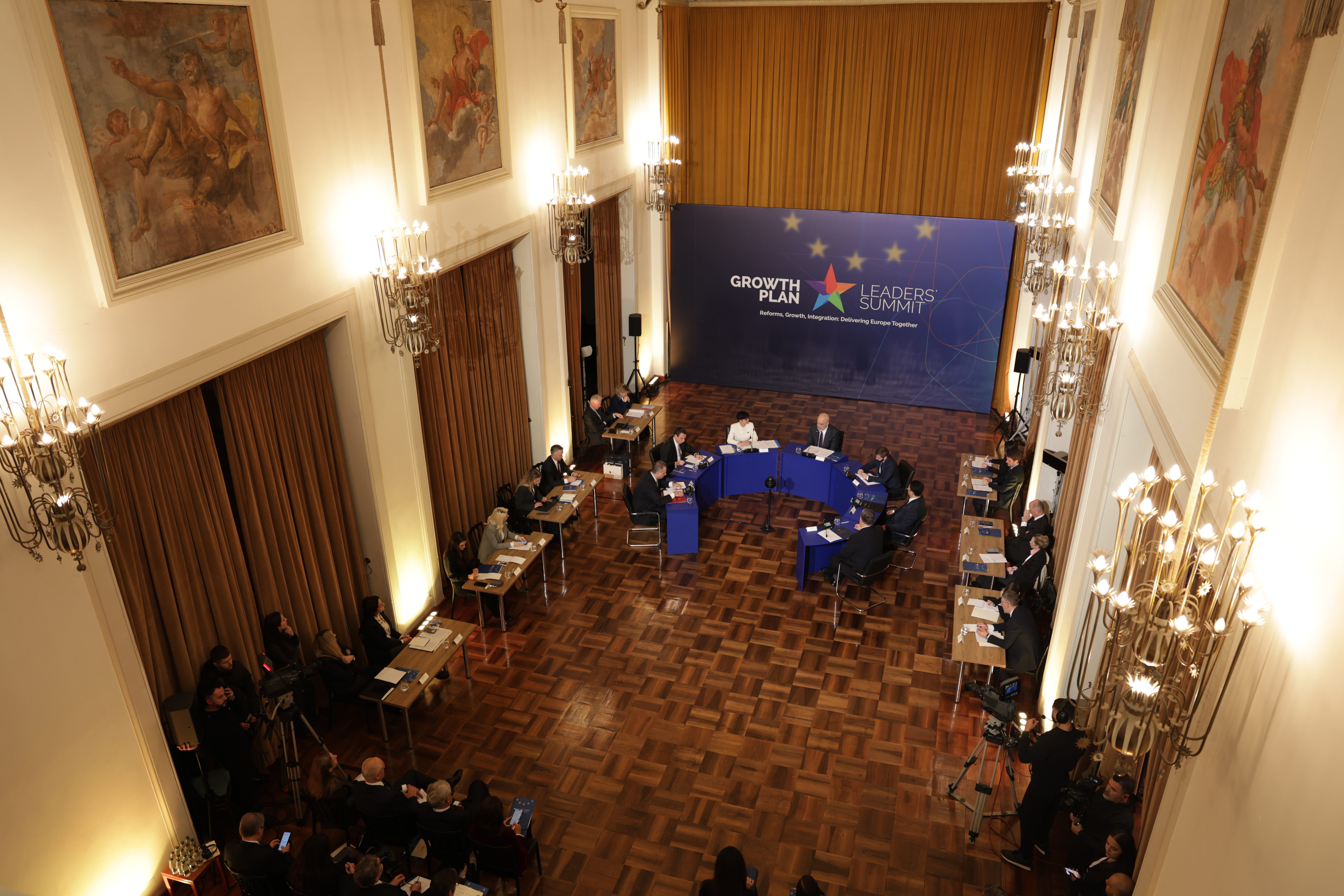
Growth Plan Leaders' Summit brought together leaders from the Western Balkans and European Commissioner for Enlargement Marta Kos to review progress in implementing the EU's Growth Plan (Photo: RCC/Rei Lico)
Tirana – Secretary General of the Regional Cooperation Council (RCC), Amer Kapetanović, called on the Western Balkans Six (WB6) to accelerate the implementation of the Common Regional Market (CRM) and ensure that political differences do not obstruct regional economic integration at the Growth Plan Leaders’ Summit held in Tirana today.
The Summit brought together leaders from the Western Balkans and European Commissioner for Enlargement Marta Kos to review progress in implementing the European Union’s Growth Plan for the Western Balkans, discuss outstanding challenges and agree on priorities for advancing reforms, regional economic integration and gradual integration into the EU Single Market.
“In a world that has become harder for small economies, the six of us can still choose not to stay small. That is what this market is for, and RCC will see it through with you,” said Kapetanović, stressing that regional integration is essential for strengthening the competitiveness and economic resilience of the Western Balkans.
Addressing the leaders, Kapetanović underlined that the Common Regional Market, coordinated by the RCC, is one of the pillars of the EU Growth Plan, complementing domestic reforms and gradual integration into the EU Single Market. While reforms prepare the region for the Single Market, regional economic integration gives its businesses the scale and competitiveness needed to succeed within it.
He pointed to concrete achievements that demonstrate the benefits of regional cooperation, including roaming at domestic prices across the WB6 since 2021 and the accession of four Western Balkans economies to the Single Euro Payments Area (SEPA), which has significantly reduced the costs of international payments. However, he cautioned that administrative barriers, restrictions on services and differences in regulations continue to limit the potential of the regional market.
“We moved fastest where the benefit was visible, the work stayed technical, and the reward was clear. We stalled where technical files were caught in wider disputes,” Kapetanović said, urging the acceleration of implementation, the resolution of outstanding issues and the setting of concrete deadlines. Referring to the RCC's Balkan Barometer findings, Kapetanović noted that citizens increasingly recognise the value of regional cooperation but expect more tangible results, particularly at a time when living costs and economic uncertainty remain major concerns.
Western Balkans leaders welcomed the progress achieved in advancing the Common Regional Market and expressed appreciation for the RCC's work and coordinating role in supporting regional economic integration and implementation of the Growth Plan. Discussions highlighted the importance of maintaining momentum, addressing remaining obstacles and ensuring that regional commitments translate into concrete benefits for citizens and businesses.
With the EU Reform and Growth Facility entering its final year and the Common Regional Market Action Plan 2025-2028 approaching its midpoint, the pace of implementation must increase considerably. Delivering on the remaining commitments will require stronger coordination, political support and willingness to compromise in the common regional interest. As the region's own cooperation framework, the RCC will continue working closely with WB6 governments, the European Commission and regional partners to coordinate implementation, monitor progress and support delivery of the Common Regional Market commitments.
The Growth Plan Leaders’ Summit was preceded by a series of high-level meetings in Tirana, including the Tourism Ministerial Meeting, which marked the launch of the RCC-developed Western Balkans Six Regional Tourism Facility, the EU–Western Balkans New Frontier Investment Conference, where Kapetanović presented a regional portfolio of 32 investment opportunities, and the European Integration Ministerial Meeting. Together, these meetings focused on advancing regional economic integration, attracting investment and accelerating the implementation of the EU Growth Plan.